
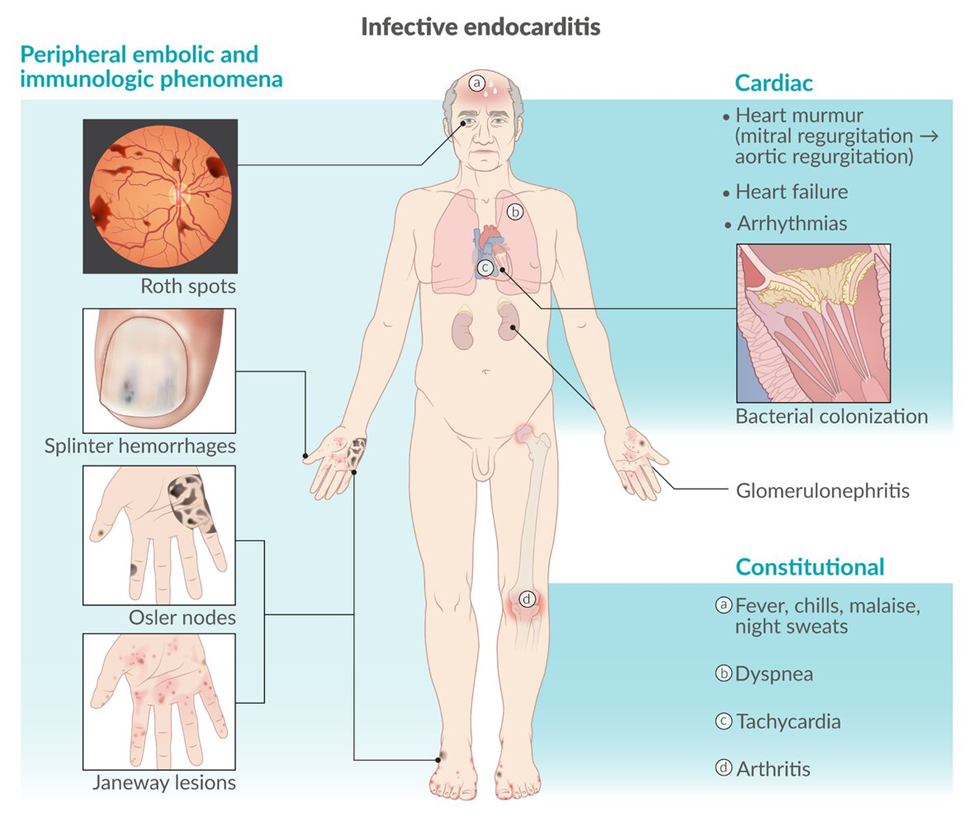
A nurse is assessing a toddler who has infective endocarditis. Which of the following findings should the nurse expect?
New heart murmur
Weight gain
Bradycardia
Decreased body temperature
The Correct Answer is A
A. New heart murmur
This is a common finding in infective endocarditis due to damage to the heart valves caused by the infection. The infection can lead to the development of new heart murmurs or changes in existing ones as the valves become affected.
B. Weight gain
Weight gain is not typically associated with infective endocarditis. In fact, individuals with infective endocarditis may experience weight loss due to symptoms such as fever, loss of appetite, and malaise.
C. Bradycardia
Bradycardia, or a slow heart rate, is not a typical finding in infective endocarditis. In many cases, individuals with infective endocarditis may actually present with tachycardia (rapid heart rate) due to fever and the body's response to infection.
D. Decreased body temperature
Infective endocarditis is often associated with fever, which would lead to an elevated body temperature rather than a decreased one.
Nursing Test Bank
Naxlex Comprehensive Predictor Exams
Related Questions
Correct Answer is D
Explanation
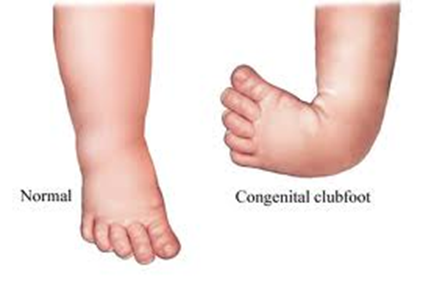
A. Ophthalmologist: This healthcare professional specializes in the diagnosis and treatment of eye disorders. While eye problems can occur in infants, congenital talipes equinovarus specifically involves foot deformities rather than eye issues. Therefore, a referral to an ophthalmologist wouldn't be appropriate for this condition.
B. Nutrition counselor: A nutrition counselor provides guidance on diet and nutrition-related issues. While nutrition is essential for overall health, it's not directly related to the treatment of congenital talipes equinovarus. Therefore, a referral to a nutrition counselor wouldn't typically be part of the care plan for this condition.
C. Speech therapist: Speech therapists, also known as speech-language pathologists, specialize in evaluating and treating communication and swallowing disorders. However, congenital talipes equinovarus doesn't affect speech or swallowing. Therefore, a referral to a speech therapist wouldn't be relevant for this condition.
D. Orthopedic specialist: An orthopedic specialist is a healthcare professional who specializes in the diagnosis and treatment of musculoskeletal conditions, including congenital abnormalities like clubfoot. They are trained to assess the severity of the deformity and develop a treatment plan, which may include non-surgical or surgical interventions to correct the foot alignment. Therefore, a referral to an orthopedic specialist is the most appropriate choice for an infant with congenital talipes equinovarus.
Correct Answer is D
Explanation
A. "You should give your child aspirin if they report pain at the site."
This statement is incorrect. Aspirin is a blood-thinning medication that can increase the risk of bleeding, which is particularly concerning after a cardiac catheterization procedure. It is not recommended to administer aspirin unless specifically instructed by the healthcare provider.
B. "You can remove the pressure dressing 8 hours after the procedure."
This statement is incorrect. The pressure dressing applied after a cardiac catheterization procedure is typically left in place for a specific period of time, as determined by the healthcare provider. The dressing helps prevent bleeding at the insertion site. It is essential to follow the healthcare provider's instructions regarding the timing of dressing removal.
C. "Your child can soak in the bathtub 24 hours after the procedure."
This statement is incorrect. Immersing the insertion site in water, such as soaking in a bathtub, should be avoided for a certain period after a cardiac catheterization procedure to reduce the risk of infection. The healthcare provider will provide specific instructions on when it is safe for the child to bathe or shower.
D. "Your child should avoid strenuous physical activities for several days."
This statement is correct. After a cardiac catheterization procedure, it is typically recommended to avoid strenuous physical activities for a specified period to allow the insertion site to heal properly and reduce the risk of complications such as bleeding or hematoma formation.
Whether you are a student looking to ace your exams or a practicing nurse seeking to enhance your expertise , our nursing education contents will empower you with the confidence and competence to make a difference in the lives of patients and become a respected leader in the healthcare field.
Visit Naxlex, invest in your future and unlock endless possibilities with our unparalleled nursing education contents today