
A nurse is assisting in developing the plan of care for a client with streptococcal pharyngitis. What is an appropriate action to include in the plan of care?
Place the client in a negative airflow room.
Obtain a throat culture after the initial dose of antibiotics.
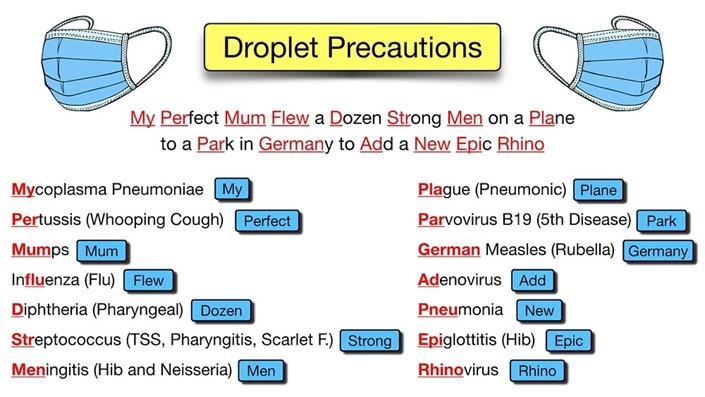
Implement droplet precautions.
Place the client on a fluid restriction.
The Correct Answer is C
The correct answer is choice C. Implement droplet precautions. Streptococcal pharyngitis is a highly contagious infection caused by group A beta-hemolytic streptococcus. Droplet precautions are the appropriate precautionary measures to prevent the spread of the infection. This includes placing the client in a private room or with a client with the same infection, wearing a mask or respirator, and using proper hand hygiene. Option A is incorrect because negative airflow rooms are not required for clients with streptococcal pharyngitis. Option B is incorrect because throat cultures should be obtained before the initial dose of antibiotics. Option D is incorrect because fluid restriction is not a necessary intervention for clients with streptococcal pharyngitis.
Option A - Negative airflow rooms are used for airborne illnesses like tuberculosis.
Option B - Throat culture should be obtained before the initial dose of antibiotics.
Option D - Fluid restriction is not a necessary intervention for clients with streptococcal pharyngitis.
Nursing Test Bank
Naxlex Comprehensive Predictor Exams
Related Questions
Correct Answer is D
Explanation
The correct answer is choice D. During injection of the contrast medium, the client may experience a feeling of heat. Choices A and C are incorrect because numbness in the fingertips and pain in the jawline are not expected during the procedure. Choice B is incorrect because the urge to urinate is associated with cystoscopy. Choice A is not correct because numbness in the fingertips is not expected during the procedure. Choice B is not correct because the urge to urinate is associated with cystoscopy. Choice C is not correct because pain in the jawline is not expected during the procedure.
Correct Answer is D
Explanation
The correct answer is choice D. Requires nasogastric suction.

Nasogastric suction removes gastric secretions that contain potassium, leading to a loss of potassium from the body.
This can cause hypokalemia, which is a low level of potassium in the blood.
Choice A is wrong because Addison’s disease causes hyperkalemia, which is a high level of potassium in the blood.
Choice B is wrong because tissue damage can release potassium from the cells into the blood, causing hyperkalemia.
Choice C is wrong because uric acid level is not related to potassium level.
Uric acid is a waste product of purine metabolism that can cause gout or kidney stones if elevated.
Whether you are a student looking to ace your exams or a practicing nurse seeking to enhance your expertise , our nursing education contents will empower you with the confidence and competence to make a difference in the lives of patients and become a respected leader in the healthcare field.
Visit Naxlex, invest in your future and unlock endless possibilities with our unparalleled nursing education contents today