
A nurse is caring for a client diagnosed with a paralytic ileus. What would be an expected assessment finding?
Pencil-thin stools
Fecal-smelling breath
Passage of mucus and blood in stools
Absent bowel sounds and absent passage of flatus
The Correct Answer is D
D. In paralytic ileus, there is a lack of bowel motility, resulting in absent or diminished bowel sounds on auscultation and absent passage of flatus. The bowel sounds may be hypoactive or completely absent due to the lack of peristalsis. Additionally, the client may experience abdominal distention and discomfort due to the accumulation of gas and fluid in the intestines.
A. Pencil-thin stools are more commonly associated with conditions such as colorectal cancer or rectal strictures. In paralytic ileus, where there is a lack of bowel motility, the stools are typically absent rather than thin.
B. Fecal-smelling breath is not a typical finding in paralytic ileus. While it may occur in conditions associated with severe constipation or bowel obstruction, it is not specific to paralytic ileus.
C. Passage of mucus and blood in stools is not a characteristic finding of paralytic ileus. It is more commonly associated with conditions such as inflammatory bowel disease or colorectal cancer.
Nursing Test Bank
Naxlex Comprehensive Predictor Exams
Related Questions
Correct Answer is C
Explanation
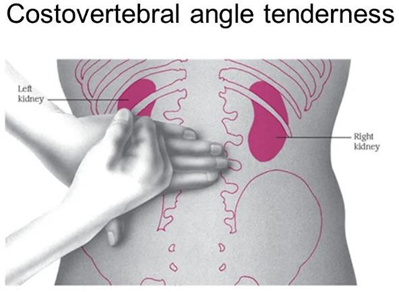
C. Costovertebral tenderness, which is tenderness over the costovertebral angle (where the ribs meet the vertebral column) on palpation, is more indicative of acute pyelonephritis rather than cystitis. In acute pyelonephritis, inflammation of the kidney parenchyma and surrounding tissues can lead to tenderness in this area.
A. Both acute pyelonephritis and cystitis can present with urinary urgency, as it is a common symptom of urinary tract infections (UTIs) in general.
B. Increased WBCs in urinalysis: While an increased number of white blood cells (WBCs) in the urinalysis can indicate a urinary tract infection, it is not specific to either acute pyelonephritis or cystitis.
D. Hematuria can occur in both acute pyelonephritis and cystitis.
Correct Answer is D
Explanation
D. In paralytic ileus, there is a lack of bowel motility, resulting in absent or diminished bowel sounds on auscultation and absent passage of flatus. The bowel sounds may be hypoactive or completely absent due to the lack of peristalsis. Additionally, the client may experience abdominal distention and discomfort due to the accumulation of gas and fluid in the intestines.
A. Pencil-thin stools are more commonly associated with conditions such as colorectal cancer or rectal strictures. In paralytic ileus, where there is a lack of bowel motility, the stools are typically absent rather than thin.
B. Fecal-smelling breath is not a typical finding in paralytic ileus. While it may occur in conditions associated with severe constipation or bowel obstruction, it is not specific to paralytic ileus.
C. Passage of mucus and blood in stools is not a characteristic finding of paralytic ileus. It is more commonly associated with conditions such as inflammatory bowel disease or colorectal cancer.
Whether you are a student looking to ace your exams or a practicing nurse seeking to enhance your expertise , our nursing education contents will empower you with the confidence and competence to make a difference in the lives of patients and become a respected leader in the healthcare field.
Visit Naxlex, invest in your future and unlock endless possibilities with our unparalleled nursing education contents today