
A nurse is caring for a client who has bipolar disorder. The client yells at the nurse whenevermedication changes are prescribed by the client's provider.
The nurse should identify that theclient is using which of the following defense mechanisms?
Conversion
Splitting
Displacement
Sublimation
The Correct Answer is C
Explanation:
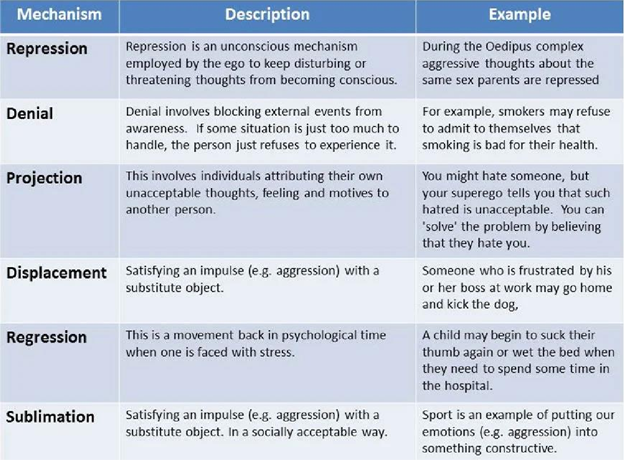
Displacement is a defense mechanism in which an individual redirect their emotions or impulses from their original target to a less threatening or safer target. In this scenario, the client yells at the nurse when medication changes are prescribed by the provider. The client may be feeling angry or frustrated about the medication changes but is unable to express those emotions directly towards the provider. Instead, the client displaces those feelings onto the nurse, who may be seen as a safer or more accessible target. The yelling behavior directed at the nurse is a way for the client to release and express their emotions indirectly.
Let's briefly discuss the other defense mechanisms mentioned:
A- Conversion: Conversion involves the expression of psychological distress or conflict through physical symptoms or ailments. It is not applicable in this scenario since the client's behavior does not involve physical symptoms.
B- Splitting: Splitting is a defense mechanism characterized by a black-and-white thinking pattern, where individuals perceive others or situations as all good or all bad. It does not directly apply in this scenario as the client's behavior is not indicative of splitting.
D- Sublimation: Sublimation is a defense mechanism in which an individual channel their unacceptable or potentially harmful impulses into socially acceptable outlets, such as creative or productive activities. It is not evident in this scenario as the client's behavior does not involve transforming the emotions into a more positive or socially acceptable form.
Nursing Test Bank
Naxlex Comprehensive Predictor Exams
Related Questions
Correct Answer is E
Explanation
Adequate fluid intake helps to soften the stool, prevent constipation, and ease bowel movements. It can also help with bladder function and prevent urinary tract infections. This intervention is particularly relevant given the client's complaint of abdominal cramping and a small, hard, painful bowel movement.
The other options are not appropriate based on the information provided:
- "Encourage prolonged dangling before ambulation" is not necessary or relevant in this case. The client is already transferring out of bed to a chair independently and ambulating independently in the hallway, indicating sufficient mobility.
- "Irrigate indwelling catheter with 500 mL of fluid" is not indicated based on the provided information. The urinary catheter is intact, and the client is producing an appropriate amount of urine. There is no indication of urinary retention or need for irrigation.
- "Administer an enema" is not necessary at this point. The client has reported a small, hard, painful bowel movement, which indicates constipation. However, conservative measures such as encouraging oral fluid intake and possibly adding dietary fiber should be tried first before considering an enema.
- "Assist the client with a sitz bath" is not directly related to the client's current symptoms. A sitz bath is typically used for perineal hygiene, pain relief, or healing after certain surgical procedures, but it does not address the reported abdominal cramping or constipation.
Correct Answer is A
Explanation
Explanation
A. Turn cellular phones to silent mode
Staff members should be advised to silence their cellular phones during an active shooter situation. This helps maintain silence and prevents the ringing or vibrating of phones from potentially revealing the location of individuals hiding or seeking shelter.
Move wounded clients to a safe area before finding shelter in (option B) is not correct. In the event of an active shooter situation. The safety of both staff members and clients is paramount. If it can be done quickly and without putting oneself or others at significant risk, moving wounded clients to a safe area before finding shelter may be advisable. However, the primary focus should be on finding shelter and protecting oneself from harm.
Attempt to bargain with the shooter in (option C) is not correct. Engaging in negotiations or attempting to reason with an active shooter can be extremely dangerous and may escalate the situation. Staff members should be instructed to prioritize their own safety and follow established active shooter protocols, which often involve evacuating, hiding, or acting to incapacitate or disable the shooter as a last resort.
Wave hands to attract the attention of law enforcement in (option D) is not correct. Waving hands or making sudden movements that may be misconstrued as threatening can potentially result in harm or confusion when law enforcement or security personnel are responding to an active shooter situation. It is important to follow their instructions calmly and clearly, keeping hands visible and following their guidance to ensure everyone's safety.
In summary, the nurse should recommend turning cellular phones to silent mode, moving wounded clients to a safe area if possible, not attempting to bargain with the shooter, and avoiding actions that may be misinterpreted by law enforcement. These recommendations are aimed at prioritizing personal safety and following established protocols to minimize risks during an active shooter situation.
Whether you are a student looking to ace your exams or a practicing nurse seeking to enhance your expertise , our nursing education contents will empower you with the confidence and competence to make a difference in the lives of patients and become a respected leader in the healthcare field.
Visit Naxlex, invest in your future and unlock endless possibilities with our unparalleled nursing education contents today