
A nurse is caring for an adolescent who has hyperthermia. Which of the following actions should the nurse take?
Cover the adolescent with a thermal blanket.
Submerge the adolescent’s feet in ice water.
Initiate seizure precautions.
Administer oral acetaminophen.
The Correct Answer is C
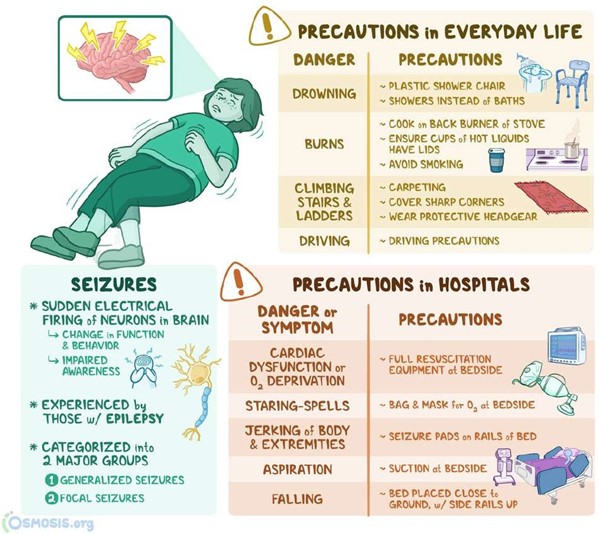
Hyperthermia is a condition in which the body temperature is abnormally high, usually due to exposure to heat, infection, or certain medications. Hyperthermia can cause neurological complications, such as seizures, confusion, or coma. Therefore, the nurse should initiate seizure precautions for an adolescent who has hyperthermia to prevent injury and protect the airway.
Choice A is wrong because covering the adolescent with a thermal blanket would increase the body temperature and worsen hyperthermia. The nurse should remove excess clothing and use cooling measures, such as fans, ice packs, or cool fluids.
Choice B is wrong because submerging the adolescent’s feet in ice water would cause vasoconstriction and shivering, which would reduce heat loss and increase heat production. The nurse should avoid using extreme cold or ice water to cool the body.
Choice D is wrong because administering oral acetaminophen would not be effective for hyperthermia caused by non-infectious factors, such as heat exposure or medications.
Acetaminophen lowers the body temperature by reducing the hypothalamic set point, which is not altered in hyperthermia. Additionally, oral medications may be difficult to swallow or absorb in a hyperthermic patient.
Normal body temperature ranges from 36.5°C to 37.5°C (97.7°F to 99.5°F). Hyperthermia is defined as a body temperature above 38.5°C (101.3°F).
Nursing Test Bank
Naxlex Comprehensive Predictor Exams
Related Questions
Correct Answer is A
Explanation
Hct stands for hematocrit, which is the percentage of red blood cells (RBCs) in the blood. A client who received 2 units of packed RBCs should have an increased Hct because they have more RBCs in their blood volume.
The normal range for Hct is 38% to 50% for males and 36% to 44% for females.
Choice B is wrong because decreased Hgb means decreased hemoglobin, which is the protein that carries oxygen in the RBCs.
A client who received 2 units of packed RBCs should have an increased Hgb because they have more hemoglobin in their blood. The normal range for Hgb is 13.5 to 17.5 g/dL for males and 12 to 15.5 g/dL for females.
Choice C is wrong because increased platelets means increased thrombocytes, which are the cells that help with blood clotting.
A client who received 2 units of packed RBCs should not have an increased platelet count because they did not receive platelets in the transfusion. The normal range for platelets is 150,000 to 400,000/mm^3.
Choice D is wrong because decreased WBC count means decreased leukocytes, which are the cells that fight infection and inflammation.
A client who received 2 units of packed RBCs should not have a decreased WBC count because they did not receive WBCs in the transfusion. The normal range for WBC count is 4,500 to 11,000/mm^3.
Correct Answer is ["B","C","D"]
Explanation
B, C, and D. These findings require follow-up because they indicate possible complications of chemotherapy, such as infection, low blood cell counts, and lung damage.
Choice B is correct because a temperature of 38.6° C (101.5° F) is a sign of fever, which can indicate an infection. Chemotherapy can weaken the immune system and make the client more prone to infections.
Choice C is correct because a WBC count of 3,800/mm3 is below the normal range of 5,000 to 10,000/mm3 and indicates leukopenia, a condition of low white blood cells. Chemotherapy can cause leukopenia by damaging the bone marrow where blood cells are produced.
Choice D is correct because crackles heard at the bases of the lungs are abnormal breath sounds that can indicate fluid accumulation or inflammation in the lungs. Chemotherapy can cause lung damage by affecting the cells that line the airways or by triggering an immune response.
Choice A is wrong because a potassium level of 3.6 mEq/L is within the normal range of 3.5 to 5 mEq/L and does not require follow-up.
Choice E is wrong because a blood pressure of 114/56 mm Hg is within the normal range of less than 120/80 mm Hg and does not require follow-up.
Whether you are a student looking to ace your exams or a practicing nurse seeking to enhance your expertise , our nursing education contents will empower you with the confidence and competence to make a difference in the lives of patients and become a respected leader in the healthcare field.
Visit Naxlex, invest in your future and unlock endless possibilities with our unparalleled nursing education contents today