
A nurse is collecting data on a client who has swelling of the lower leg. The nurse should identify that which of the following findings is a manifestation of compartment syndrome?
Affected extremity warm to touch
Moderate pain on the ankle of the affected extremity
Blanch time of 2 seconds in the toenail beds of the affected extremity
Palpation of a +1 dorsal pedal pulse of the affected extremity
The Correct Answer is B
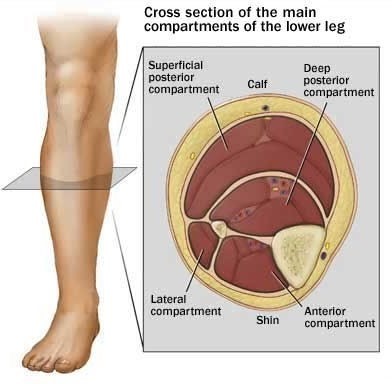
A nurse collecting data on a client who has swelling of the lower leg should identify that moderate pain on the ankle of the affected extremity is a manifestation of compartment syndrome. Compartment syndrome is a painful condition that occurs when pressure within a muscle compartment increases to dangerous levels.
The other options are not typical symptoms of compartment syndrome.
a) An affected extremity being warm to touch is not a typical symptom of compartment syndrome.
c) A blanch time of 2 seconds in the toenail beds of the affected extremity is not a typical symptom of compartment syndrome.
d) Palpation of a +1 dorsal pedal pulse of the affected extremity is not a typical symptom of
compartment syndrome.
Nursing Test Bank
Naxlex Comprehensive Predictor Exams
Related Questions
Correct Answer is C
Explanation
Answer: C. Weigh the client each morning after voiding
Rationale:
A. Encourage the client to gain 2.3 kg (5 lb) per week:
A weight gain goal of 0.5 to 1 kg (1 to 2 lb) per week is considered safe and realistic. Gaining 2.3 kg (5 lb) weekly is too aggressive and may cause physical and psychological stress for the client.
B. Monitor the client for 15 min after meals:
Clients with anorexia nervosa are at risk for purging behaviors. Monitoring for only 15 minutes is insufficient. A 60-minute post-meal observation period is more appropriate to deter vomiting or excessive exercise.
C. Weigh the client each morning after voiding:
Daily weights, taken at the same time each morning after voiding and before eating, provide consistent and accurate data to monitor progress and detect manipulation or fluid shifts.
D. Reinforce teaching about healthy eating during meals:
Reinforcing education during meals can increase the client’s anxiety and resistance to eating. Teaching is best done separately from mealtimes to avoid associating eating with stress.
Correct Answer is D
Explanation
The nurse should recommend that the client who has diminished breath sounds and paradoxical chest movement receive care first. This client is likely experiencing a tension pneumothorax, which is a life-threatening condition that requires immediate intervention.
Option a is incorrect because a client who has a head injury and whose pupils are fixed and dilated may have experienced brain death and may not be able to be resuscitated.
Option b is incorrect because a dislocated shoulder, while painful, is not immediately life-threatening. Option c is incorrect because a scalp laceration with intermittent bleeding can be managed with pressure and is not immediately life-threatening.
Whether you are a student looking to ace your exams or a practicing nurse seeking to enhance your expertise , our nursing education contents will empower you with the confidence and competence to make a difference in the lives of patients and become a respected leader in the healthcare field.
Visit Naxlex, invest in your future and unlock endless possibilities with our unparalleled nursing education contents today