
A nurse is conducting preoperative teaching with a client who is to undergo open abdominal surgery. Which of the following is important to prevent postoperative complications?
Discuss pain management with the client.
Explain the need for sequential compression devices.
Review the policy with the client and family.
Ensure the operative site has been secured.
The Correct Answer is B
Choice A reason: Discussing pain management is important for patient comfort but does not directly prevent postoperative complications.
Choice B reason: Sequential compression devices are used to prevent deep vein thrombosis, a common postoperative complication, making this the correct answer.
Choice C reason: Reviewing policy with the client and family is part of the overall care but is not specific to preventing postoperative complications.
Choice D reason: Ensuring the operative site has been secured is a procedural task and does not directly prevent postoperative complications.
Nursing Test Bank
Naxlex Comprehensive Predictor Exams
Related Questions
Correct Answer is B
Explanation
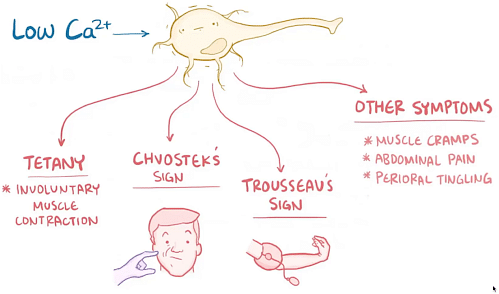
Choice A reason: Hypoactive bowel sounds are not typically associated with hypocalcemia.
Choice B reason: Tingling of the lips, also known as paresthesia, is a common symptom of hypocalcemia due to the effect of low calcium levels on nerve function.
Choice C reason: Decreased deep tendon reflexes are more commonly associated with hypercalcemia, not hypocalcemia.
Choice D reason: Skeletal muscle weakness can be a symptom of severe hypocalcemia, but tingling of the lips is a more immediate and common finding.
 |
Correct Answer is C
Explanation
Choice A reason: Serosanguineous drainage is a mixture of blood and clear fluid, not typically yellow and thick.
Choice B reason: Serous drainage is clear and watery, not yellow and thick.
Choice C reason: Purulent drainage is typically yellow and thick, indicating the presence of pus, which can be a sign of infection.
Choice D reason: Sanguineous drainage is fresh bleeding, bright red in color, not yellow and thick.
Whether you are a student looking to ace your exams or a practicing nurse seeking to enhance your expertise , our nursing education contents will empower you with the confidence and competence to make a difference in the lives of patients and become a respected leader in the healthcare field.
Visit Naxlex, invest in your future and unlock endless possibilities with our unparalleled nursing education contents today