
A nurse is performing a cranial nerve assessment on a client following a head injury. Which of the following findings should the nurse expect if the client has impaired function of the vestibulocochlear nerve (cranial nerve VIII)?
Inability to smell
Loss of peripheral vision
Disequilibrium with movement
Deviation of the tongue from midline
The Correct Answer is C
C. The vestibulocochlear nerve is responsible for both the vestibular function and the cochlear function. Impaired function of the vestibulocochlear nerve could result in symptoms related to vestibular dysfunction, such as disequilibrium (feeling unsteady or off balance) especially with movement.
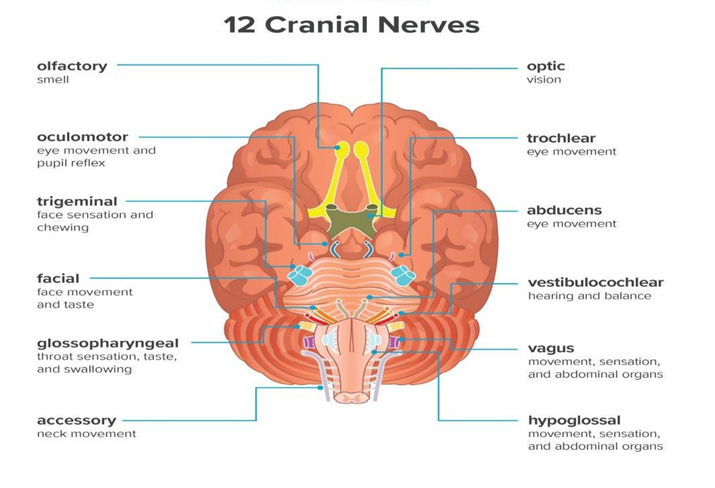
A. The olfactory nerve (cranial nerve I) is responsible for the sense of smell.
B. Loss of peripheral vision is typically associated with impairment of the optic nerve (cranial nerve II), which is responsible for vision.
D. Deviation of the tongue occurs in injury to the hypoglossal nerve.
Nursing Test Bank
Naxlex Comprehensive Predictor Exams
Related Questions
Correct Answer is ["69"]
Explanation
Convert the weight from pounds to kilograms
190 lb * (1 kg / 2.2046 lb) = 86.183 kg (rounded to three decimal places)
The recommended dietary allowance (RDA) of protein:86.183 kg * 0.8 g/kg = 68.946 g/day
Rounding to the nearest whole number, the client should receive approximately 69 grams of protein daily.
Correct Answer is A
Explanation
A. Frequent vitals monitoring to allow for early detection of infection. Clients with neutropenia are at increased risk of infections.
B. Indwelling catheter and other devices should be avoided in individuals with neutropenia die to risk of sepsis.
C. Changing the client’s linen is important. However, doing it 3 times a day is not necessary.
D. Clients should be placed in a positive airflow room to prevent contracting infections from infected persons
Whether you are a student looking to ace your exams or a practicing nurse seeking to enhance your expertise , our nursing education contents will empower you with the confidence and competence to make a difference in the lives of patients and become a respected leader in the healthcare field.
Visit Naxlex, invest in your future and unlock endless possibilities with our unparalleled nursing education contents today