
A nurse is preparing to insert an IV catheter for a client following a right mastectomy. Which of the following veins should the nurse select when initiating IV therapy?
The cephalic vein on the back of the right hand
The radial vein on the left wrist
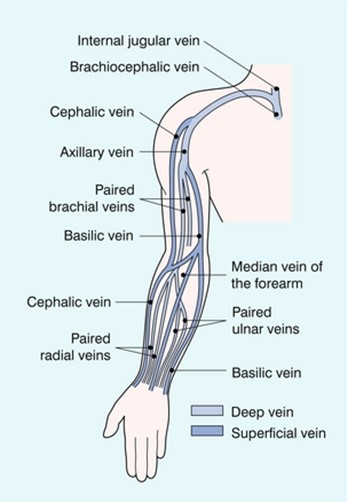
The basilic vein in the right antecubital fossa
The cephalic vein in the left distal forearm
The Correct Answer is C
Choice A reason:
The cephalic vein on the back of the right hand is incorrect because it might still involve the same arm as the mastectomy site, and it is important to avoid this side.
Choice B reason:
The radial vein on the left wrist is incorrect because it is not on the opposite side of the mastectomy and could increase the risk of lymphedema.
Choice C reason:
The basilic vein in the right antecubital fossa is the appropriate answer. When inserting an IV catheter for a client who has undergone a right mastectomy, it is generally advisable to avoid the arm on the same side as the mastectomy due to the risk of lymphedema and impaired lymphatic drainage. The basilic vein in the right antecubital fossa (the inner bend of the right elbow) would be a suitable choice in this case, as it is on the opposite side of the mastectomy.
Choice D reason:
The cephalic vein in the left distal forearm is on the same side as the mastectomy and should be avoided to reduce the risk of complications.
Nursing Test Bank
Naxlex Comprehensive Predictor Exams
Related Questions
Correct Answer is A
Explanation
Choice A reason:
A. Place the tourniquet below the proposed insertion site.
When preparing to insert an IV catheter, placing the tourniquet below the proposed insertion site helps facilitate venous distension, making it easier to locate and access a suitable vein for catheter insertion.
Choice B reason:
Placing the extremity in a dependent position (lower than the heart) can increase venous pressure and make it more difficult to insert the catheter.
Choice C reason:
Choosing the most proximal site on the extremity is not always necessary or appropriate. Veins distal to the proposed insertion site should be considered first, as they tend to be smaller and less accessible.
Choice D reason:
Applying a cool compress is not typically done before IV catheter insertion. It might cause vasoconstriction and make it more difficult to access a suitable vein.
Correct Answer is A
Explanation
Choice A reason:
Plain yogurt is appropriate for a full-liquid diet as it is a liquid at room temperature and provides nutritional value.
A full-liquid diet consists of foods that are liquid at room temperature and can be easily poured or sipped. It includes clear liquids as well as liquids that are more opaque, like milk-based products and certain blended foods. Among the options provided:
Choice B reason:
Scrambled eggs are not appropriate. Scrambled eggs are not typically considered a part of a full-liquid diet. They have a solid texture and may not be suitable for this specific dietary progression.
Choice C reason:
Oatmeal is inappropriate. Oatmeal is a solid food that does not meet the criteria for a full-liquid diet. It is usually allowed on a soft or regular diet after appropriate postoperative recovery.
Choice D reason:
Applesauce is inappropriate. While applesauce is softer than solid foods, it is not typically included in a full liquid diet. It is more commonly associated with a soft or pureed diet.
Whether you are a student looking to ace your exams or a practicing nurse seeking to enhance your expertise , our nursing education contents will empower you with the confidence and competence to make a difference in the lives of patients and become a respected leader in the healthcare field.
Visit Naxlex, invest in your future and unlock endless possibilities with our unparalleled nursing education contents today