
A nurse is preparing to insert an IV catheter for an adult client.
Which of the following actions should the nurse take?
Choose the most proximal site on the extremity selected.
Apply a cool compress for several minutes before insertion of the IV catheter.
Place the tourniquet below the proposed insertion site.
Place the extremity in a dependent position.
The Correct Answer is D
The nurse should place the extremity in a dependent position before inserting an IV catheter.
This helps to dilate the veins and make them more visible and easier to access.
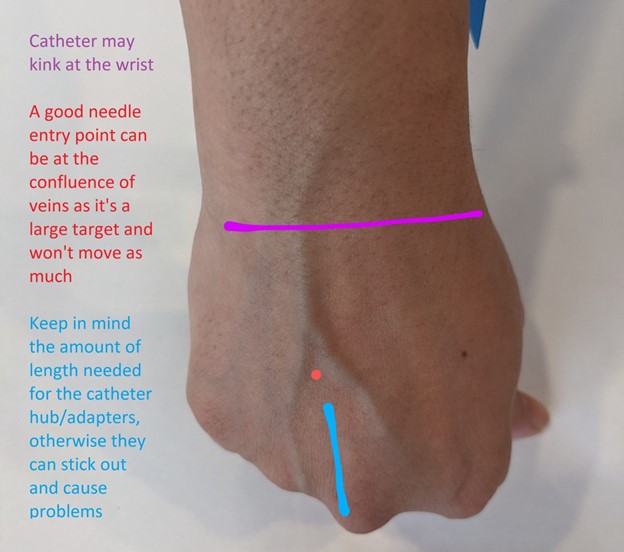
Choice A is wrong because the nurse should choose a site that is distal to the most proximal site on the extremity selected.
This helps to preserve more proximal sites for future use if needed.
Choice B is wrong because applying a cool compress before insertion of an IV catheter can cause vasoconstriction and make it more difficult to access the vein.
Instead, a warm compress can be applied to help dilate the veins.
Choice C is wrong because the tourniquet should be placed above, not below, the proposed insertion site to help dilate the vein and make it easier to access.
Nursing Test Bank
Naxlex Comprehensive Predictor Exams
Related Questions
Correct Answer is B
Explanation
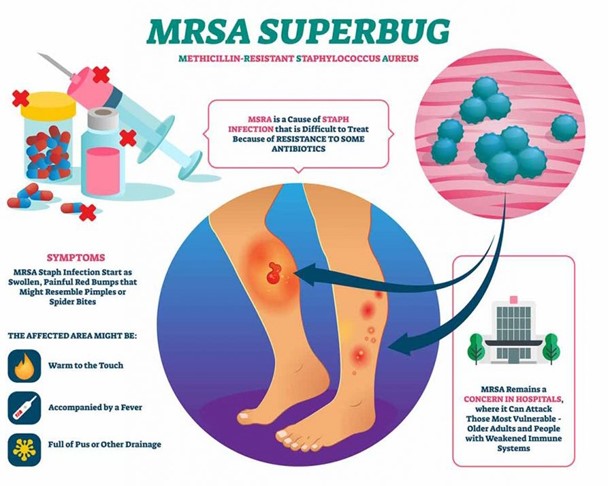
A client with MRSA infection should be placed in a private room to prevent the spread of infection.
Choice A is wrong because an N95 respirator mask is not necessary when caring for a client with an MRSA infection.
Choice C is wrong because the proper sequence for removing personal protective equipment is to remove gloves first, then the gown.
Choice D is wrong because visitors do not need to wear a mask when they are within 3 feet of the client with an MRSA infection.
Correct Answer is A
Explanation
This indicates that the compress has been effective in relieving lower back pain and has not caused any skin irritation or damage.
Choice B is wrong because the ability to concentrate while reading is not directly related to the effectiveness of a warm, moist compress for relieving lower back pain.
Choice C is wrong because vital signs being within the expected reference range does not necessarily indicate that the compress has been effective in relieving lower back pain.
Choice D is wrong because laughing at a television show does not necessarily indicate that the compress has been effective in relieving lower back pain.
Whether you are a student looking to ace your exams or a practicing nurse seeking to enhance your expertise , our nursing education contents will empower you with the confidence and competence to make a difference in the lives of patients and become a respected leader in the healthcare field.
Visit Naxlex, invest in your future and unlock endless possibilities with our unparalleled nursing education contents today