
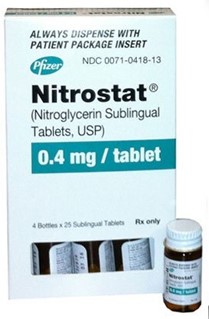
A nurse is providing instructions to a client who has a new prescription for sublingual nitroglycerin (Nitrostat) to treat angina pectoris. Which of the following instructions should the nurse include?
Avoid taking the medication prior to exercising.
Stop taking the medication and notify your provider if you develop a headache.
Use a small amount of water to moisten the mouth before placing the tablet under the tongue.
The medication can take up to 15 minutes to take effect.
None
None
The Correct Answer is C
Nursing Test Bank
Naxlex Comprehensive Predictor Exams
Related Questions
Correct Answer is A
Explanation
The nurse should identify that this client has multiple risk factors for cardiovascular disease, such as hypertension, obesity, and smoking. These factors can increase the risk of atherosclerosis, coronary artery disease, stroke, and peripheral vascular disease.
Depression is wrong because it is not directly related to the client's physical examination findings. Depression may have other risk factors, such as genetics, stress, trauma, or substance abuse.
Thyroid disease is wrong because it is not directly related to the client's physical examination findings. Thyroid disease may have other risk factors, such as autoimmune disorders, iodine deficiency, or radiation exposure.
Testicular cancer is wrong because it is not directly related to the client's physical examination findings. Testicular cancer may have other risk factors, such as cryptorchidism, family
Correct Answer is D
Explanation
A headache is a common and expected adverse effect of nitroglycerin, due to its vasodilating action. The client can take an over-the-counter analgesic to relieve the headache, unless contraindicated.
"A headache is an indication of an allergy to the medication." is not correct, as a headache is not a sign of an allergic reaction to nitroglycerin. An allergic reaction would manifest as rash, itching, swelling, or difficulty breathing.
"A headache indicates tolerance to the medication." is not accurate, as a headache does not indicate tolerance to nitroglycerin. Tolerance would manifest as reduced or absent relief from anginal pain.
"A headache is likely due to the anxiety about the chest pain." is not plausible, as a headache is not likely due to the anxiety about the chest pain. Anxiety would manifest as nervousness, restlessness, palpitations, or sweating.
Whether you are a student looking to ace your exams or a practicing nurse seeking to enhance your expertise , our nursing education contents will empower you with the confidence and competence to make a difference in the lives of patients and become a respected leader in the healthcare field.
Visit Naxlex, invest in your future and unlock endless possibilities with our unparalleled nursing education contents today