
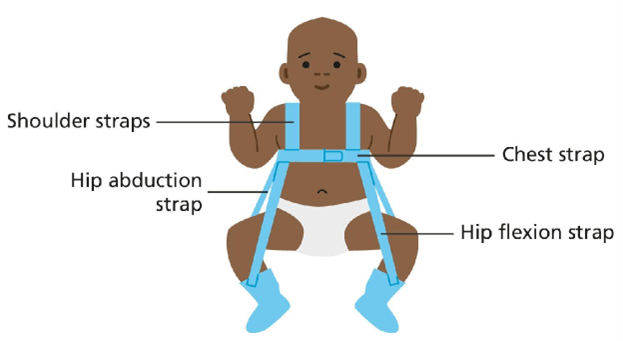
A nurse is reinforcing teaching with the parents of an infant who has a Pavlik harness.
Which of the following statements should the nurse include in the teaching?
You can apply lotion under the straps of the harness.
The harness can be removed for sleeping each night.
The harness can promote hip joint development.
You should place the diaper over the strap of the harness.
The Correct Answer is C
Explanation:
The Pavlik harness is a device used to treat developmental dysplasia of the hip (DDH) in infants. It helps position the hips in a way that promotes proper hip joint development. By keeping the hips in a flexed and abducted position, the harness helps to align the hip joint properly, allowing for normal development.
A- Applying lotion under the straps of the harness is not recommended as it can interfere with the harness's effectiveness and may cause skin irritation.
B- The harness should not be removed for sleeping unless specifically instructed by the healthcare provider. It is typically worn continuously to ensure consistent hip positioning and optimal treatment outcomes.
D- Placing the diaper over the strap of the harness is not recommended as it can cause discomfort for the infant and may interfere with the proper fit and function of the harness. The diaper should be placed under the harness straps to ensure a secure and comfortable fit.
Nursing Test Bank
Naxlex Comprehensive Predictor Exams
Related Questions
Correct Answer is A
Explanation
Ensuring the device is kept below the level of the client's chest is important to ensure that the drainage system functions properly by allowing the fluid and air to flow downhill. Placing the device below the level of the chest helps facilitate gravity drainage.
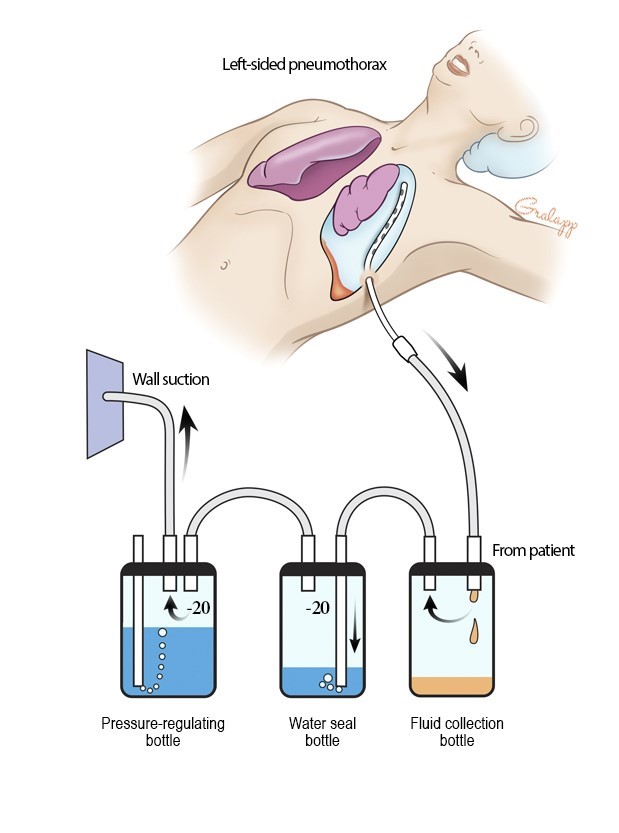
Continuous suction is required for proper functioning of the chest tube drainage system. Clamping the chest tube can disrupt the suction and impede the removal of air or fluid from the pleural space. Only in specific circumstances, such as when changing the drainage system or assessing for air leaks, may the healthcare provider request a temporary clamping of the chest tube.
Positioning the client semi-Fowler's, with the head of the bed elevated, can help promote lung expansion and improve oxygenation. The specific positioning may vary depending on the client's condition and the healthcare provider's recommendations.
The nurse should empty the collection chamber as per the facility's protocol, which typically includes monitoring the drainage and emptying it when it reaches a certain level. Regular emptying of the collection chamber helps maintain proper functioning of the chest tube system and allows for accurate measurement of drainage output.
Correct Answer is ["C"]
Explanation
A.While it's important to document visitors and support persons, this information may not be considered crucial for the change-of-shift report unless it directly impacts the client's care or well-being.
B. The client received the prescribed antibiotic every 8 hours: This is important information, but it is typically documented in the medication administration record (MAR) and does not need to be included in the verbal report unless there were issues or changes related to the medication.
C. The client reports pain is reduced when positioned on his side: This is significant information as it informs the incoming nurse about the client's preferred position for pain management. It helps guide the nurse in providing comfort measures and appropriate positioning for the client. The client's mother died 4 years ago from breast cancer: This information may not be considered vital for the change-of-shift report unless it directly impacts the client's current condition or ongoing care.
D. The client's mother died 4 years ago from breast cancer: This information may not be considered vital for the change-of-shift report unless it directly impacts the client's current condition or ongoing care.
Whether you are a student looking to ace your exams or a practicing nurse seeking to enhance your expertise , our nursing education contents will empower you with the confidence and competence to make a difference in the lives of patients and become a respected leader in the healthcare field.
Visit Naxlex, invest in your future and unlock endless possibilities with our unparalleled nursing education contents today