
A nurse is teaching a client about self-administration of enoxaparin.
Which of the following instructions should the nurse include? (Select all that apply.).
"Insert the entire length of the needle into the skin during injection.”
"Massage the insertion site after injecting the medication.”
"Grasp the skin between the thumb and forefinger while injecting the medication.”
"Alternate injection sites between the sides of the abdomen.”
"Expel the air bubble from the prefilled syringe.”
Correct Answer : A,C,D
When self-administering enoxaparin, the client should “Insert the entire length of the needle into the skin during injection” 1, “Grasp the skin between the thumb and forefinger while injecting the medication” , and “Alternate injection sites between the sides of the abdomen”
Choice B is wrong because the client should not massage the insertion site after injecting the medication.
Choice E is incorrect because the client should not expel the air bubble from the prefilled syringe.
The air bubble helps to ensure that all of the medication is injected and prevents leakage from the injection site.
Nursing Test Bank
Naxlex Comprehensive Predictor Exams
Related Questions
Correct Answer is C
Explanation
The correct answer is C. "I should stay upright for at least 15 minutes after taking this medication."
Choice A rationale:
Black stools are a common side effect of iron supplements and do not usually require notification of the provider unless accompanied by other symptoms such as pain or gastrointestinal bleeding.
Choice B rationale:
Iron supplements should not be taken with milk because calcium can interfere with the absorption of iron, reducing its effectiveness.
Choice C rationale:
Staying upright for at least 15 minutes after taking ferrous gluconate helps prevent the risk of esophageal irritation or discomfort, which indicates the client's correct understanding of this key instruction.
Choice D rationale:
Taking an antacid with ferrous gluconate is not recommended because antacids can interfere with the absorption of iron, reducing its efficacy.
Choice E rationale:
This is the same as Choice D and also incorrect for the same reason regarding the interaction between antacids and iron absorption.
Correct Answer is B
Explanation
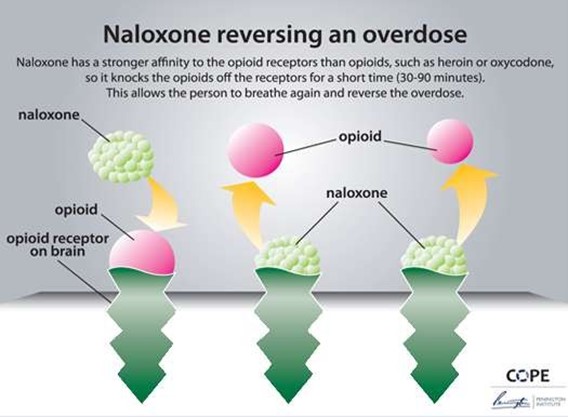
This is because naloxone is an opioid antagonist that rapidly reverses an opioid overdose by attaching to opioid receptors and reversing and blocking the effects of other opioids.
It can quickly restore normal breathing to a person if their breathing has slowed or stopped because of an opioid overdose.
Choice A is wrong because decreased nausea is not a therapeutic effect of naloxone.
Choice C is wrong because decreased blood pressure is not a therapeutic effect of naloxone.
Choice D is wrong because increased pain relief is not a therapeutic effect of naloxone.
Whether you are a student looking to ace your exams or a practicing nurse seeking to enhance your expertise , our nursing education contents will empower you with the confidence and competence to make a difference in the lives of patients and become a respected leader in the healthcare field.
Visit Naxlex, invest in your future and unlock endless possibilities with our unparalleled nursing education contents today