
A nurse is transcribing a client's prescription for erythromycin 500 mg four times per day. Which of the following information should the nurse clarify with the provider?
Time
Medication
Dosage
Route
The Correct Answer is D
A.The prescription specifies “four times per day,” which is clear.
B. The medication specified is erythromycin, which is clear
C. The dosage of 500 mg is clearly specified.
D. The route of administration eg. oral, topical is not specified and needs to be clarified to ensure proper administration.
Nursing Test Bank
Naxlex Comprehensive Predictor Exams
Related Questions
Correct Answer is C
Explanation
Explanation
C. Initiate contact precautions
Clostridium difficile is a bacterium that causes diarrhea and can be easily transmitted from person to person. Contact precautions are necessary to prevent the spread of the infection. This includes wearing gloves and a gown when providing direct care to the child, ensuring proper hand hygiene, and implementing proper disinfection protocols for the environment.
The other options are not necessary or specific to the care of a child with Clostridium difficile:
Using an N95 respirator in (option A) is not necessary for the care of a child with Clostridium difficile. Respirators are typically used for airborne precautions, which are not indicated for this specific infection.
Instructing the parents to avoid bringing fresh flowers into the room in (option)is not specific to the care of a child with Clostridium difficile. While it is generally recommended to minimize potential sources of contamination in healthcare settings, this particular instruction is not specific to this infection.
Placing the child in a room with a HEPA filtration system in (option D) is not necessary for the care of a child with Clostridium difficile. HEPA filtration systems are typically used for airborne precautions, which are not indicated for this specific infection.
Correct Answer is A
Explanation
Ensuring the device is kept below the level of the client's chest is important to ensure that the drainage system functions properly by allowing the fluid and air to flow downhill. Placing the device below the level of the chest helps facilitate gravity drainage.
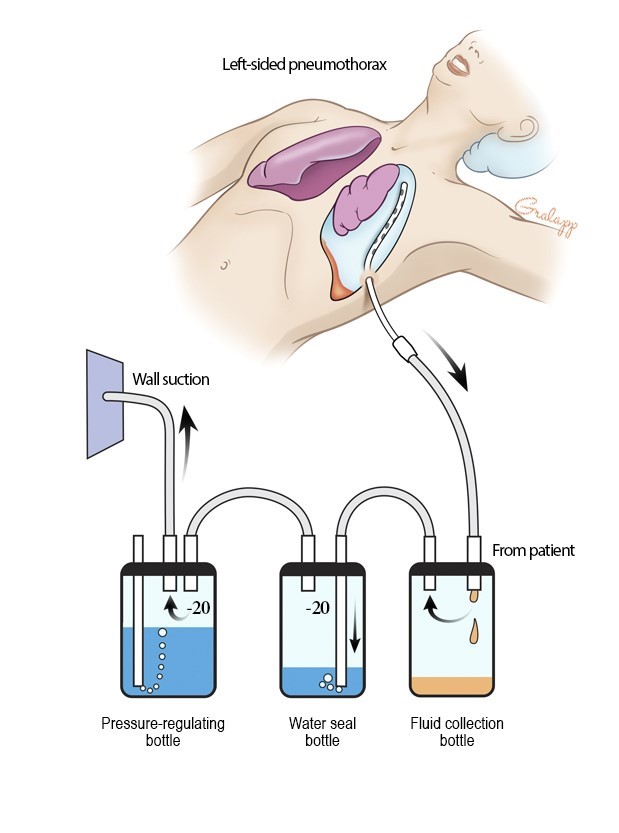
Continuous suction is required for proper functioning of the chest tube drainage system. Clamping the chest tube can disrupt the suction and impede the removal of air or fluid from the pleural space. Only in specific circumstances, such as when changing the drainage system or assessing for air leaks, may the healthcare provider request a temporary clamping of the chest tube.
Positioning the client semi-Fowler's, with the head of the bed elevated, can help promote lung expansion and improve oxygenation. The specific positioning may vary depending on the client's condition and the healthcare provider's recommendations.
The nurse should empty the collection chamber as per the facility's protocol, which typically includes monitoring the drainage and emptying it when it reaches a certain level. Regular emptying of the collection chamber helps maintain proper functioning of the chest tube system and allows for accurate measurement of drainage output.
Whether you are a student looking to ace your exams or a practicing nurse seeking to enhance your expertise , our nursing education contents will empower you with the confidence and competence to make a difference in the lives of patients and become a respected leader in the healthcare field.
Visit Naxlex, invest in your future and unlock endless possibilities with our unparalleled nursing education contents today