
A nurse is using Nägele's Rule to calculate the expected delivery date of a client who reports that the first day of her last menstrual cycle was July 28th.
Which of the following dates should the nurse document as the client's expected delivery date?
April 21st.
May 5th.
May 21st.
April 4th.
The Correct Answer is B
Nägele’s Rule is a method for estimating the expected date of delivery (EDD) or confinement (EDC).
It involves adding seven days and one year, and subtracting three months, from the first day of the last menstrual period (LMP)1.
Using this rule, if the first day of the client’s last menstrual period was July 28th, then adding seven days would be August 4th.
Subtracting three months would be May 4th.
Adding one year would be May 4th of the following year.
Therefore, the nurse should document May 5th as the client’s expected delivery date.
Choice A is incorrect because April 21st is too early according to Nägele’s Rule calculation.
Choice C is incorrect because May 21st is too late according to Nägele’s Rule calculation.
Choice D is incorrect because April 4th is too early according to Nägele’s Rule calculation.
Nursing Test Bank
Naxlex Comprehensive Predictor Exams
Related Questions
Correct Answer is B
Explanation
The nurse should report a fundal height of 38 cm to the provider.
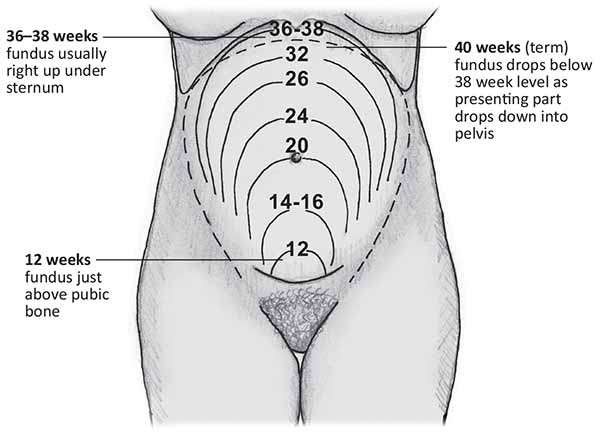
Fundal height is measured from the top of the pubic bone to the top of the uterus and is used to assess fetal growth.
A fundal height measurement that is larger than expected for gestational age may indicate macrosomia, which is a common complication of gestational diabetes mellitus.
Choice A is incorrect because non-pitting pedal edema is common during late pregnancy and is usually caused by physiologic edema resulting from hormone- induced sodium retention.
Choice C is incorrect because 12 fetal movements in an hour are within normal
range.
Choice D is incorrect because a fasting blood glucose level of 90 mg/dL is within normal range for a pregnant woman with gestational diabetes mellitus.
Correct Answer is C
Explanation
Correct answer: C-"You should hold your newborn in your arms when you introduce him to your toddler.”
Choice A is not an answer because this approach is not suitable for dealing with regressive behaviors in toddlers. Regressive behavior, such as wanting to sleep in the crib or revert to bottle-feeding, is a normal response to the stress of a new sibling. Instead of punishment, parents should provide reassurance, comfort, and understanding. Time-outs may exacerbate feelings of insecurity rather than alleviate them.
Choice B is not an answer because While transitioning a toddler out of the crib can be a part of preparation, it should not be rushed. Doing so too early may create unnecessary stress for the toddler. The best time to make significant changes (like transitioning to a bed) is when the toddler is ready, and it should be done with care and gradual preparation, not too close to the arrival of the baby.
Choice C is the most appropriateanswer becauseIt’s important to allow the toddler to feel involved and included in the process, but holding the newborn during the introduction helps minimize feelings of jealousy and ensures the toddler doesn't feel displaced. Holding the baby allows the toddler to approach the situation more calmly, and it can also help foster a sense of love and comfort for both the toddler and the newborn.
Choice D:While it’s important to reassure the toddler that they are still loved and important, this statement might unintentionally increase anxiety or make the toddler feel less valued. Instead, the nurse should encourage a positive approach, where the toddler can learn how to be a helper and feel involved in the care of the newborn. It’s essential to focus on inclusivity rather than highlighting potential feelings of neglect.
Whether you are a student looking to ace your exams or a practicing nurse seeking to enhance your expertise , our nursing education contents will empower you with the confidence and competence to make a difference in the lives of patients and become a respected leader in the healthcare field.
Visit Naxlex, invest in your future and unlock endless possibilities with our unparalleled nursing education contents today