
A nurse manager is providing an in-service to a group of newly licensed nurses about the use of personal protective equipment. Which of the following statements by a newly licensed nurse indicates an understanding of the teaching?
"I should wear a gown to remove linens from a client's bed."
"Sterile gloves are required when administering an IM injection."
"I should use both hands to recap a needle."
"I should wear goggles when irrigating a wound."
The Correct Answer is D
D. Wearing goggles or eye protection when irrigating a wound helps prevent splashes or sprays of contaminated fluid from entering the nurse's eyes.
A Gowns are typically used during direct patient contact if there is an expectation of substantial contact with blood or body fluids.
B Sterile gloves are not typically required for administering an intramuscular (IM) injection. Instead, clean non-sterile gloves are sufficient to maintain aseptic technique during the procedure.
C. Recapping needles using both hands can increase the risk of needlestick injuries. It is recommended to use a one-handed scoop method or a safety device to recap needles safely.
Nursing Test Bank
Naxlex Comprehensive Predictor Exams
Related Questions
Correct Answer is C
Explanation
C. This statement highlights difficulty with a specific ADL (grooming) that OT can assess and intervene to improve independence and quality of life.
A Difficulty swallowing, preference for a wheelchair over a walker, and problems with bladder control may also require medical attention, but they are not directly related to the occupational therapy's primary focus on improving the patient's ability to perform daily activities
B. This statement suggests mobility issues and possibly difficulty with walking due to muscle weakness. While mobility aids such as wheelchairs and walkers are typically addressed by physical therapists, OT can also be involved in evaluating the client's preferences, abilities, and functional mobility needs.
D. While OT primarily focuses on ADLs and functional tasks, bladder control problems typically require evaluation and management by a urologist or specialist in urology.
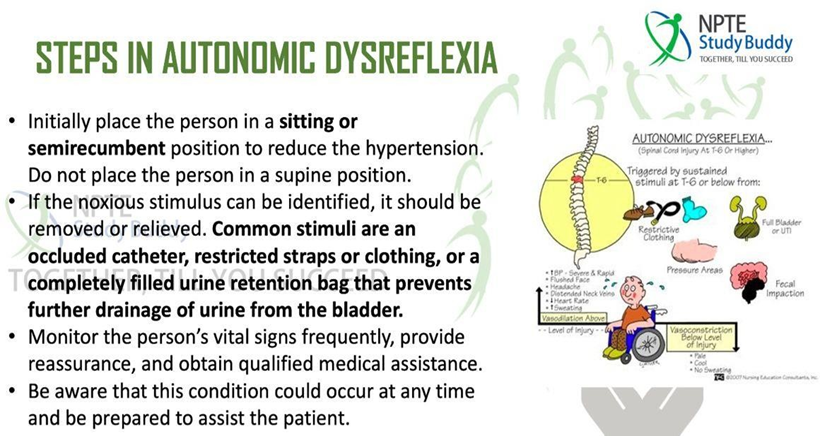
Correct Answer is D,B,A,C
Explanation
Step D (Place the client in an upright sitting position): Elevating the client's head and upper body to an upright position helps to reduce blood pressure by promoting venous pooling in the lower extremities.
Step B (Confirm that the client's bladder is empty): Autonomic dysreflexia is often triggered by bladder distention or urinary retention. By confirming and addressing urinary issues promptly, the nurse can remove the triggering stimulus.
Step A (Administer an antihypertensive medication intravenously): In severe cases where blood pressure remains dangerously high despite other interventions, such as positioning and addressing bladder issues, antihypertensive medications may be necessary to lower blood pressure quickly and prevent complications.
Step C (Indicate the risk for autonomic dysreflexia in the client's medical record): Documentation of the occurrence of autonomic dysreflexia, its triggers, and interventions used is essential for continuity of care. It informs other healthcare providers about the client's condition and helps in implementing preventive strategies.
Whether you are a student looking to ace your exams or a practicing nurse seeking to enhance your expertise , our nursing education contents will empower you with the confidence and competence to make a difference in the lives of patients and become a respected leader in the healthcare field.
Visit Naxlex, invest in your future and unlock endless possibilities with our unparalleled nursing education contents today