
A nurse recently administered filgrastim intravenously to a client who has cancer and is receiving cytotoxic chemotherapy. For which of the following data, discovered after the medication was administered, should the nurse file an incident report?
The client's absolute neutrophil count was 2.500/mm³ before the medication was administered.
The nurse flushed the client's IV line with dextrose 5% in water before and after the medication was administered.
The client had chemotherapy 12 hr before the medication was administered.
The medication vial sat at room temperature for 2 hr before it was administered
The Correct Answer is D
A. The client's absolute neutrophil count was 2.500/mm³ before the medication was administered:
Incorrect Explanation: This is a normal data point that does not suggest an adverse event or error.
Explanation: An absolute neutrophil count of 2.500/mm³ is within the normal range, and there is no indication of a problem related to the administration of filgrastim based on this information.
B. The nurse flushed the client's IV line with dextrose 5% in water before and after the medication was administered:
Incorrect Explanation: Routine flushing of the IV line with appropriate solutions is a standard practice and not indicative of an incident.
Explanation: Flushing the IV line with dextrose 5% in water before and after medication administration is a routine procedure to maintain line patency and prevent interactions between medications.
C. The client had chemotherapy 12 hours before the medication was administered:
Incorrect Explanation: The timing of chemotherapy does not necessarily indicate an incident.
Explanation: Knowing the timing of chemotherapy is important for overall patient care, but it doesn't necessarily indicate an incident or error related to the administration of filgrastim.
D. The medication vial sat at room temperature for 2 hours before it was administered:
Correct Answer: This is the data point that should lead to filing an incident report.
Explanation: Many medications, including filgrastim, have specific storage requirements to ensure their effectiveness and safety. Allowing a medication vial to sit at room temperature for an extended period can compromise its stability and effectiveness. This situation should be reported as it involves a potential deviation from proper medication storage and handling procedures.
Nursing Test Bank
Naxlex Comprehensive Predictor Exams
Related Questions
Correct Answer is D
Explanation
A. Decrease in protein:
This choice is incorrect. Albumin is a protein found in the blood, and when a client is receiving an infusion of albumin, it is likely to increase, not decrease, the overall protein level in the bloodstream. Albumin infusions are often given to help increase plasma oncotic pressure and improve fluid retention in conditions like shock.
B. Oxygen saturation 96%:
This choice is incorrect. Oxygen saturation of 96% is within the normal range and reflects adequate oxygenation. It doesn't directly relate to the administration of albumin in shock.
C. PaCO2 30 mm Hg:
This choice is incorrect. The partial pressure of carbon dioxide (PaCO2) of 30 mm Hg reflects a respiratory value and doesn't directly relate to the administration of albumin or the management of shock. It's important for assessing acid-base balance, but it's not a specific finding related to the albumin infusion.
D. Increase in BP:
This is the correct choice. Albumin is a colloid solution that helps increase the oncotic pressure within blood vessels, which can contribute to an increase in blood volume. When blood volume increases, it can lead to an increase in blood pressure, which is a desired effect in the management of shock. Increasing blood pressure helps improve perfusion to vital organs and tissues, which is essential in shock situations.
Correct Answer is D
Explanation
A. Taking an HMG CoA reductase inhibitor (commonly known as statins) is not directly associated with digoxin toxicity. Statins are used to lower cholesterol levels.
B. Having a 10-year history of COPD (chronic obstructive pulmonary disease) is not directly linked to an increased risk of digoxin toxicity.
C. Having a prolapsed mitral valve is a valvular disorder and is not a primary factor that contributes to digoxin toxicity.
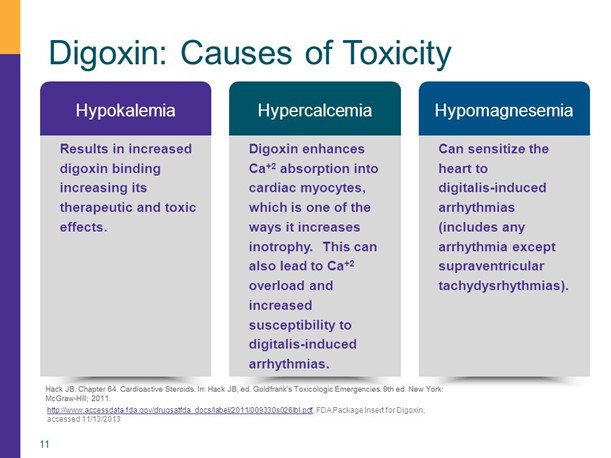
D. Taking a high-ceiling diuretic
The factor that predisposes the client to develop digoxin toxicity is taking a high-ceiling diuretic.
Digoxin toxicity can be influenced by several factors. One important factor is the levels of potassium in the blood. High-ceiling diuretics, also known as loop diuretics (e.g., furosemide), can lead to potassium loss through increased urinary excretion. Low levels of potassium (hypokalemia) can increase the risk of digoxin toxicity, as digoxin has a greater effect on the heart when potassium levels are low.
Whether you are a student looking to ace your exams or a practicing nurse seeking to enhance your expertise , our nursing education contents will empower you with the confidence and competence to make a difference in the lives of patients and become a respected leader in the healthcare field.
Visit Naxlex, invest in your future and unlock endless possibilities with our unparalleled nursing education contents today