
A nurse working on a medical-surgical unit is making client assignments for an upcoming shift.
Which of the following tasks should the nurse assign to an assistive personnel?
Showing a client how to use an incentive spirometer prior to surgery.
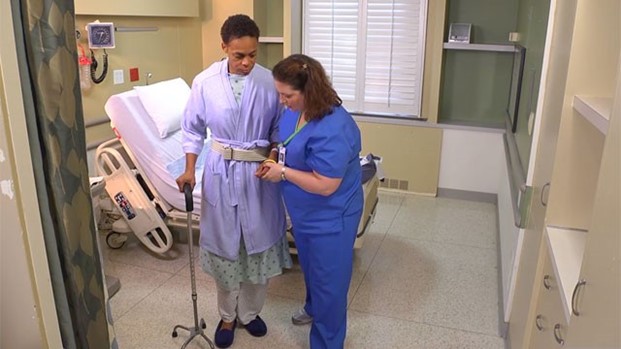
Assisting with ambulation for a client who has a pulmonary infection.
Irrigating a client's infected surgical wound.
Inserting a glycerin suppository for a client who is constipated.
The Correct Answer is B
Assisting with ambulation for a client who has a pulmonary infection.
Assistive personnel can perform basic nursing care functions such as assisting patients with mobility.
Choice A is wrong because showing a client how to use an incentive spirometer prior to surgery requires more specialized knowledge and training.
Choice C is wrong because irrigating a client’s infected surgical wound is a more complex medical procedure that should be performed by a licensed nurse.
Choice D is wrong because inserting a glycerin suppository for a client who is constipated is also a more complex medical procedure that should be performed by a licensed nurse.
Nursing Test Bank
Naxlex Comprehensive Predictor Exams
Related Questions
Correct Answer is D
Explanation
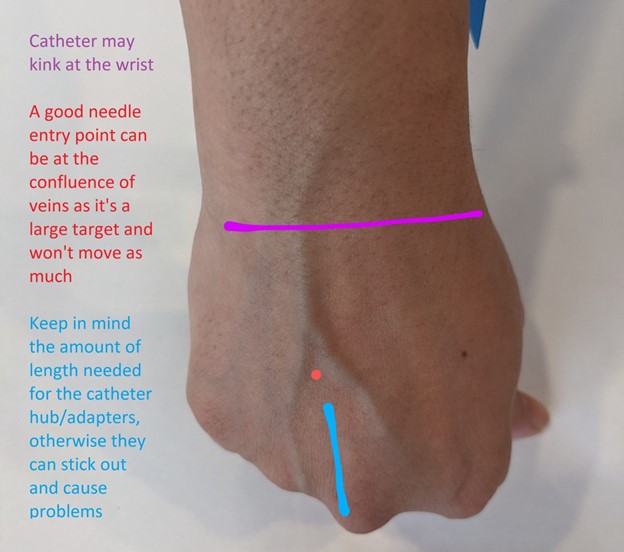
The nurse should place the extremity in a dependent position before inserting an IV catheter.
This helps to dilate the veins and make them more visible and easier to access.
Choice A is wrong because the nurse should choose a site that is distal to the most proximal site on the extremity selected.
This helps to preserve more proximal sites for future use if needed.
Choice B is wrong because applying a cool compress before insertion of an IV catheter can cause vasoconstriction and make it more difficult to access the vein.
Instead, a warm compress can be applied to help dilate the veins.
Choice C is wrong because the tourniquet should be placed above, not below, the proposed insertion site to help dilate the vein and make it easier to access.
Correct Answer is C
Explanation
A.When mixing insulins, you should draw the short-acting insulin into the syringe first. This is done after injecting air into both vials (first into intermediate-acting, then into short-acting). Drawing intermediate-acting insulin first can contaminate the short-acting insulin vial with the longer-acting solution, which could alter the effectiveness of future doses.
B.Although this step is required when mixing insulins, it is not the first step. The nurse should first inject air into both vials to maintain vial pressure.
C.The nurse should inject air into the intermediate-acting insulin vial first because it helps prevent contamination and maintains the correct pressure within the vial. Intermediate-acting insulin, typically NPH (Neutral Protamine Hagedorn), is cloudy, and air injection into the vial allows for easy withdrawal later on without disrupting the order of mixing.
D.Injecting air into the short-acting insulin vial is necessary but should be done after injecting air into the intermediate-acting vial. By injecting air into both vials first, the nurse prevents a vacuum effect, which can make it difficult to draw up the insulin. After injecting air, the nurse can draw the short-acting insulin into the syringe before moving to the intermediate-acting insulin. This order minimizes the risk of contamination.
Whether you are a student looking to ace your exams or a practicing nurse seeking to enhance your expertise , our nursing education contents will empower you with the confidence and competence to make a difference in the lives of patients and become a respected leader in the healthcare field.
Visit Naxlex, invest in your future and unlock endless possibilities with our unparalleled nursing education contents today