
A nurse is planning care for a client who has a new prescription for parenteral nutrition (PN) in 20% dextrose and fat emulsions.
Which of the following is an appropriate action to include in the plan of care?
Change the PN infusion bag every 48 hr.
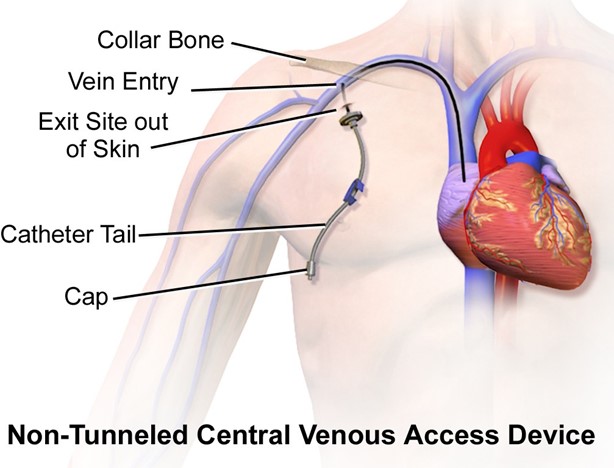
Prepare the client for a central venous line.
Obtain random blood glucose daily.
Administer the PN and fat emulsion separately.
The Correct Answer is B
Prepare the client for a central venous line.
Parenteral nutrition (PN) with 20% dextrose and fat emulsions is a hypertonic solution that requires infusion through a central venous line to prevent damage to peripheral veins.
Choice A is wrong because the PN infusion bag should be changed every 24 hours, not every 48 hours.
Choice C is wrong because blood glucose should be monitored more frequently than once daily when initiating PN therapy.
Choice D is wrong because PN and fat emulsions can be administered together in a total nutrient admixture (TNA)1.
Nursing Test Bank
Naxlex Comprehensive Predictor Exams
Related Questions
Correct Answer is D
Explanation
“Delirium has an abrupt onset.” Delirium is a serious change in mental abilities that results in confused thinking and a lack of awareness of someone’s surroundings.
The disorder usually comes on fast — within hours or a few days.
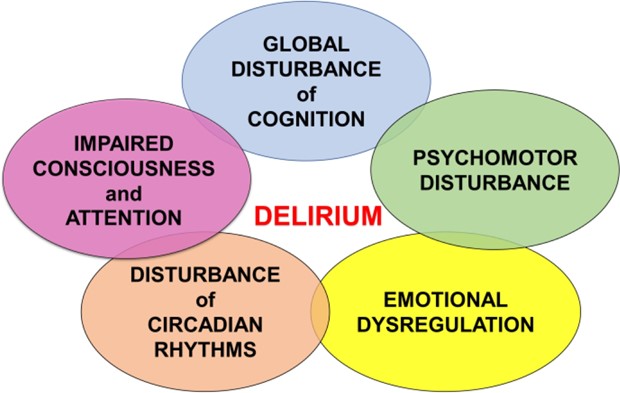
Choice A is wrong because delirium does affect a client’s perception of her environment.
Choice B is wrong because delirium does not have a slow progression, but rather an abrupt onset.
Choice C is wrong because delirium can affect a client’s sleep cycle.
Correct Answer is D
Explanation
The first two actions the nurse should take are to obtain a sputum culture and a chest X-ray.
These tests can help diagnose the cause of the client’s symptoms and guide treatment.
Choice A is wrong because administering antibiotics and bronchodilators should only be done after a diagnosis has been made.
Choice B is wrong because airborne precautions and isolation may not be necessary depending on the cause of the client’s symptoms.
Choice C is wrong because cough suppressants and antihistamines may not be appropriate treatments depending on the cause of the client’s symptoms.
Whether you are a student looking to ace your exams or a practicing nurse seeking to enhance your expertise , our nursing education contents will empower you with the confidence and competence to make a difference in the lives of patients and become a respected leader in the healthcare field.
Visit Naxlex, invest in your future and unlock endless possibilities with our unparalleled nursing education contents today