
Which bone classification includes the femur and humerus?
Flat bones
Irregular bones
Short bones
Long bones
The Correct Answer is D
A. Flat bones: Protect internal organs (e.g., skull, ribs, scapula). Not applicable to femur or humerus.
B. Irregular bones: Have complex shapes (e.g., vertebrae, facial bones). Not applicable.
C. Short bones: Cube-shaped bones of wrist and ankle (carpals, tarsals).
D. Long bones: The femur and humerus are classic long bones, characterized by a shaft (diaphysis) and two ends (epiphyses). They support weight and facilitate movement.
Nursing Test Bank
Naxlex Comprehensive Predictor Exams
Related Questions
Correct Answer is A
Explanation
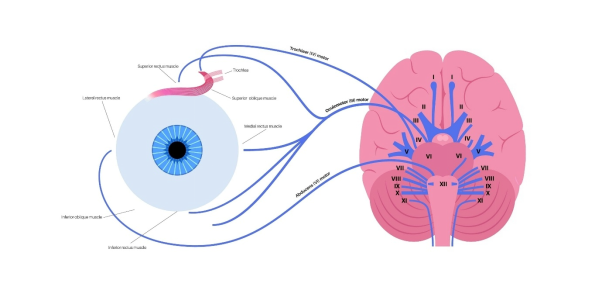
A. Oculomotor nerve (CN III):The Oculomotor nerve controls the majority of the extraocular muscles (superior, inferior, and medial rectus, and inferior oblique). It is responsible for moving the eye upward, downward, and inward, as well as lifting the eyelid and constricting the pupil.
B. Facial nerve (CN VII):The Facial nerve primarily controls muscles of facial expression (smiling, closing eyes tightly) and taste sensations, not the movement of the eyeball itself.
C. Optic nerve (CN II):The Optic nerve is a sensory nerve responsible for vision (sight). It transmits visual information from the retina to the brain but has no motor function to move the eye.
D. Trigeminal nerve (CN V):The Trigeminal nerve is primarily responsible for facial sensation (touch, pain, temperature) and the motor muscles of mastication (chewing). It does not control eye movement.
Correct Answer is C
Explanation
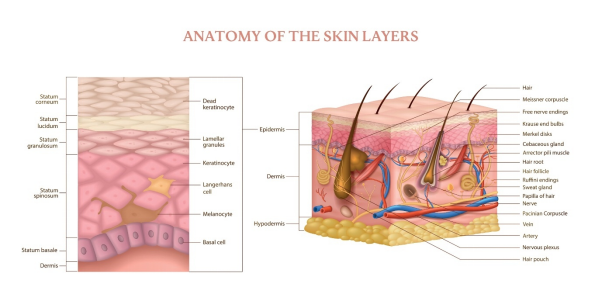
A. Adipose tissue:Adipose (fat) tissue is primarily located in the hypodermis(subcutaneous layer), which is the layer beneath the dermis.
B. Stratum lucidum:This is a specific layer of the epidermis(the outermost skin layer), found only in thick skin like the palms and soles. If the wound has reached the dermis, it has already passed through the epidermis.
C. Sweat glands:The functional units of sweat glands, hair follicles, and sebaceous (oil) glands are located within the dermis. A wound extending into this layer would disrupt these structures.
D. Melanocytes:Melanocytes are pigment-producing cells located in the stratum basale, which is the deepest layer of the epidermis, sitting just above the dermis.
Whether you are a student looking to ace your exams or a practicing nurse seeking to enhance your expertise , our nursing education contents will empower you with the confidence and competence to make a difference in the lives of patients and become a respected leader in the healthcare field.
Visit Naxlex, invest in your future and unlock endless possibilities with our unparalleled nursing education contents today