
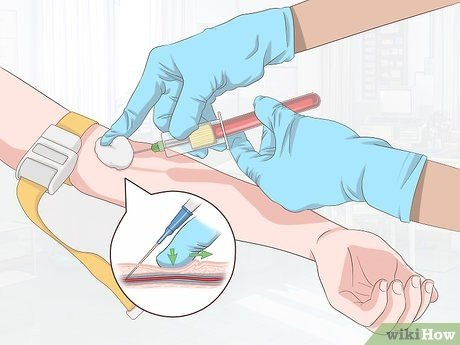
After anchoring the vein, which of the following actions should the phlebotomist take next?
Clean the site.
Perform the procedure.
Examine the needle.
Reapply the tourniquet.
The Correct Answer is B
Choice A reason:
Cleaning the site is a step that should be completed before anchoring the vein. The site should be cleaned with an antiseptic to reduce the risk of infection. Once the vein is anchored, cleaning the site again could displace the vein and compromise the anchoring.
Choice B reason:
After anchoring the vein, the phlebotomist should perform the procedure, which involves inserting the needle into the vein at the appropriate angle. Once the needle is in place and blood is seen in the tubing, the phlebotomist can proceed to collect the necessary amount of blood into the vacutainers or syringe.
Choice C reason:
Examining the needle is not the next step after anchoring the vein. The needle should be examined before the procedure begins to ensure it is the correct size and gauge for the venipuncture and that there are no defects.
Choice D reason:
Reapplying the tourniquet is not necessary at this point in the procedure. The tourniquet should already be in place to engorge the vein, making it easier to anchor and access. Reapplying it could cause discomfort or even disrupt the already anchored vein.
Nursing Test Bank
Naxlex Comprehensive Predictor Exams
Related Questions
Correct Answer is A
Explanation
Choice A reason:
The date of specimen collection is crucial for a laboratory report as it provides the context for the test results. It helps in assessing the timeliness and relevance of the results, especially when monitoring conditions that can change rapidly over time.
Choice B reason:
While the phlebotomist's initials may be recorded as part of the internal process for tracking specimen collection, they are not typically included in the patient's laboratory report. The focus of the report is on the patient and the test results, rather than on the personnel who collected the sample.
Choice C reason:
Patient diagnosis is not usually included in a laboratory report because the purpose of the report is to provide test results that may inform a diagnosis. The diagnosis is made by the healthcare provider based on the test results, along with other clinical information.
Choice D reason:
Values of previous tests may be referenced in a patient's medical record but are not a required element on a laboratory report. Each report typically presents the results of the current tests only. Comparisons to previous values, if needed, are made by the healthcare provider.
Correct Answer is C
Explanation
Choice A Reason:
Assault is an act that threatens physical harm to a person, whether or not actual harm is done. It is an intentional act where the assailant engages in an action that makes the victim fear an imminent harmful or offensive contact. It does not necessarily involve actual physical contact.
Choice B Reason:
Battery is the intentional and wrongful physical contact with a person without their consent that results in some injury or offensive touching. Unlike negligence, battery requires intentional conduct that results in harmful or offensive contact with another person.
Choice C Reason:
Negligence is the failure to take proper care in doing something, which leads to damage or injury to another person. It involves a breach of duty of care that results in harm. Negligence is not intentional; it is a legal concept that implies that a reasonable level of care was not met under the circumstances.
Choice D Reason:
Fraud is a deliberate deception to secure unfair or unlawful gain, or to deprive a victim of a legal right. Fraud involves intentional misrepresentation or concealment of an important fact upon which the victim is meant to rely, and does so to the victim's detriment. This is different from negligence, which does not involve intentional deceit.
Whether you are a student looking to ace your exams or a practicing nurse seeking to enhance your expertise , our nursing education contents will empower you with the confidence and competence to make a difference in the lives of patients and become a respected leader in the healthcare field.
Visit Naxlex, invest in your future and unlock endless possibilities with our unparalleled nursing education contents today