
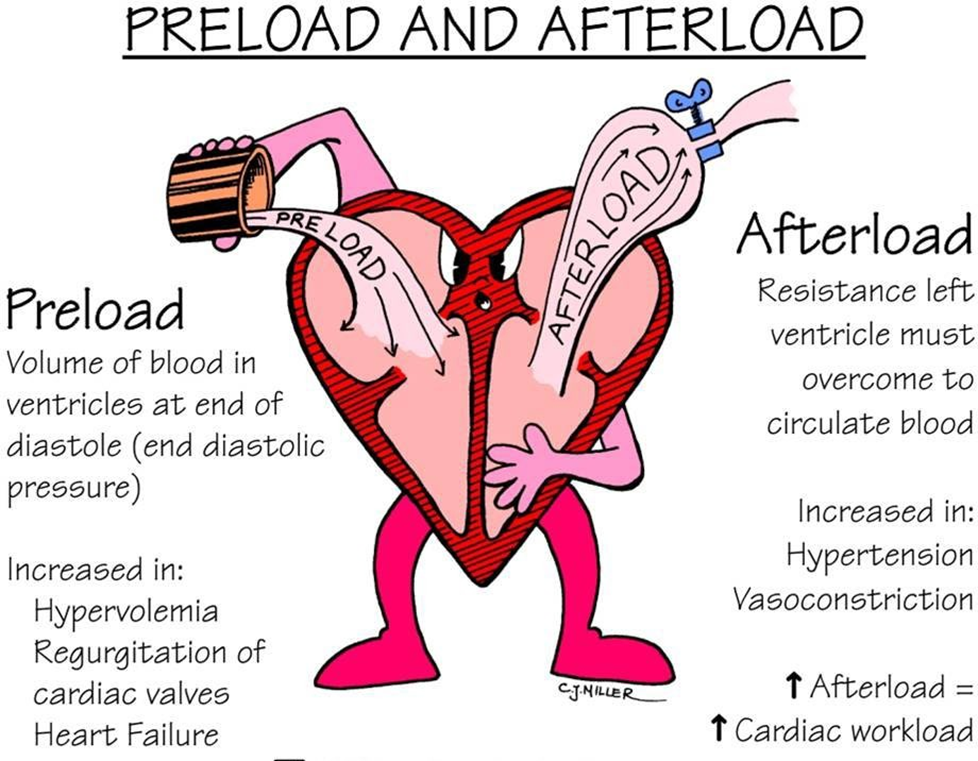
Afterload is most accurately described by which of the following?
Fluid volume status.
Atrial contraction (kick).
Resistance to blood flow.
Myocardial compliance.
The Correct Answer is C
Choice A reason: Fluid volume status affects preload, not afterload.
Choice B reason: Atrial contraction contributes to filling of the ventricles, not to afterload.
Choice C reason: Afterload is the resistance left ventricular must overcome to circulate blood, which is accurately described as resistance to blood flow.
Choice D reason: Myocardial compliance refers to the elasticity of the heart muscle, which affects how the heart fills, not the resistance it must overcome to eject blood.
Nursing Test Bank
Naxlex Comprehensive Predictor Exams
Related Questions
Correct Answer is C
Explanation
Choice A reason: A negative urine dipstick for nitrites is more indicative of a lack of bacterial infection and is not directly related to glomerulonephritis.
Choice B reason: While the absence of pain or burning with voiding is positive, it does not specifically indicate the resolution of glomerulonephritis.
Choice C reason: The resolution of periorbital and peripheral edema is a sign that the treatment for glomerulonephritis has been effective, as edema is a common symptom of this condition.
Choice D reason: A decrease in the anti-streptolysin-O (ASO) titer may indicate a response to treatment for a streptococcal infection, but it is not the most direct indicator of effective treatment for glomerulonephritis.
Correct Answer is D
Explanation
Choice A reason: Avoiding tanning booths is correct and does not indicate a need for further teaching.
Choice B reason: Using sunscreen even on cloudy days is correct and does not indicate a need for further teaching.
Choice C reason: Checking the skin monthly for any changes is correct and does not indicate a need for further teaching.
Choice D reason: The statement about eating a high-fiber diet reducing the risk for developing skin cancer indicates a misunderstanding, as there is no direct correlation between a high-fiber diet and the prevention of skin cancer. This indicates a need for further teaching.
Whether you are a student looking to ace your exams or a practicing nurse seeking to enhance your expertise , our nursing education contents will empower you with the confidence and competence to make a difference in the lives of patients and become a respected leader in the healthcare field.
Visit Naxlex, invest in your future and unlock endless possibilities with our unparalleled nursing education contents today