
MA is a 85 year old female who is admited to the hospital with Pneumonia. Education has begun on proper breathing techniques to expand lung volume as much as possible and allow for proper oxygen blood exchange within the alveoli. Which device will help her achieve this as educated by the nurse?
4L of oxygen via Nasal Cannula
Fluter Valve
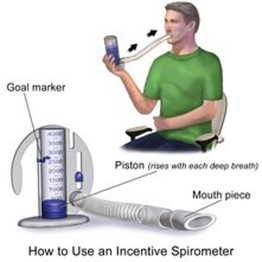
Incentive Spirometer
Abdominal Binder
The Correct Answer is C
An Incentive Spirometer is a device that helps patients take deep breaths and improve their lung function. It encourages patients to take deep breaths and to hold them for a few seconds. The device also helps to monitor and measure lung volume. By using an incentive spirometer, MA can expand her lung volume as much as possible and allow for proper oxygen blood exchange within the alveoli. This is an important technique to help prevent pneumonia and other respiratory complications.
The other options mentioned, 4L of oxygen via Nasal Cannula, Fluter Valve, and Abdominal Binder, are not appropriate devices to help MA achieve proper breathing techniques and expand lung volume. 4L of oxygen via Nasal Cannula is used to provide supplemental oxygen to patients who have difficulty breathing. Fluter Valve is a handheld device used for airway clearance in patients with chronic obstructive pulmonary disease (COPD) or cystic fibrosis. An abdominal binder is a wrap that is placed around the abdomen to support the abdominal muscles and help reduce pain after surgery or injury. These devices do not help improve lung function and are not appropriate for MA's condition.
Nursing Test Bank
Naxlex Comprehensive Predictor Exams
Related Questions
Correct Answer is D
Explanation
Explanation: In clients with COPD, the secretions tend to be thick and sticky, which makes it difficult to cough up and clear the airway. To promote respiratory hygiene in this situation, the nurse should recommend increasing fluid intake. Adequate hydration helps to thin the secretions, making them easier to expectorate. The client should aim to drink at least 8-10 glasses of water or other fluids per day unless there is a medical reason not to do so.
Decreasing fluid intake (option a) would make the secretions even thicker and more difficult to clear. Taking Tylenol for secretions (option b) is not a recommended intervention as Tylenol is not indicated for thinning of secretions. Range-of-motion exercises (option c) are important to prevent complications such as pneumonia, but they are not directly related to promoting respiratory hygiene in this situation.
Correct Answer is B
Explanation
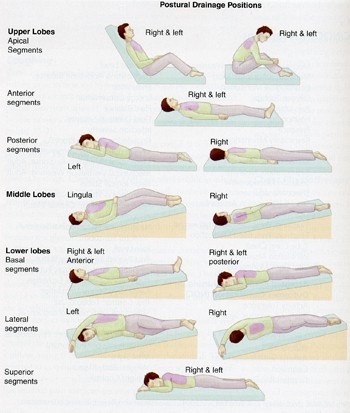
Chest physiotherapy can help loosen secretions that may not be audible with a stethoscope. This can help improve the patient’s breathing and overall lung function.
Whether you are a student looking to ace your exams or a practicing nurse seeking to enhance your expertise , our nursing education contents will empower you with the confidence and competence to make a difference in the lives of patients and become a respected leader in the healthcare field.
Visit Naxlex, invest in your future and unlock endless possibilities with our unparalleled nursing education contents today