
The client has a possible diagnosis of appendicitis. On physical examination, the nurse should assess for tenderness on palpation at McBurney's point, located at which pictured site?
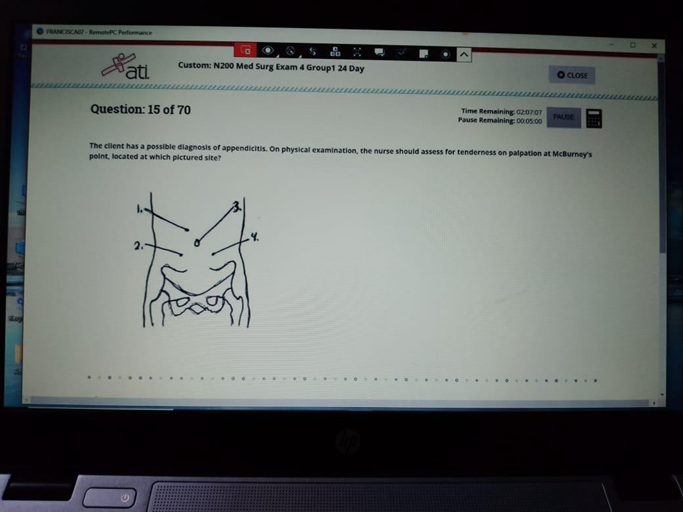
1
2
3
4
The Correct Answer is B
McBurney's point is located approximately one-third of the distance from the anterior superior iliac spine (ASIS) to the umbilicus (navel), on the right side of the abdomen.
Nursing Test Bank
Naxlex Comprehensive Predictor Exams
Related Questions
Correct Answer is B
Explanation
B. Toxic megacolon is characterized by severe colonic dilation, leading to a significant increase in abdominal girth. As the colon becomes distended, it can cause visible abdominal swelling and bloating, which may be accompanied by tenderness upon palpation.
A. In the context of toxic megacolon, there may be a reduction or cessation of bowel movements due to colonic dilation and paralysis.
C. In toxic megacolon, bowel sounds may initially be hyperactive due to increased peristalsis as the colon attempts to overcome the obstruction. However, as the condition progresses, bowel sounds may diminish or become absent due to colonic dilation and paralysis.
D. While fever can be present in toxic megacolon due to the underlying inflammatory process, it is not universally seen in all cases.
Correct Answer is B
Explanation
B. Taking pantoprazole before the first meal of the day allows for optimal acid suppression during the period of increased gastric acid production after waking up. This timing helps maximize the medication's effectiveness in reducing stomach acid and promoting ulcer healing.
A. Pantoprazole is a proton pump inhibitor (PPI) medication used to reduce stomach acid production and promote healing of gastric ulcers. It is typically taken once daily, usually in the morning before the first meal of the day. Taking pantoprazole before bedtime may not provide optimal acid suppression throughout the day when gastric acid production is typically higher.
C. Pantoprazole does not coat the ulcer; rather, it works by inhibiting the proton pumps in the stomach lining that produce acid. By reducing acid production, pantoprazole helps to create an environment in which the ulcer can heal more effectively.
D. While some individuals with conditions such as gastroesophageal reflux disease (GERD) or chronic gastric ulcers may require long-term or even lifelong pantoprazole therapy to manage their symptoms and prevent ulcer recurrence, the duration of treatment varies depending on the underlying condition, the severity of symptoms, and the response to treatment.
Whether you are a student looking to ace your exams or a practicing nurse seeking to enhance your expertise , our nursing education contents will empower you with the confidence and competence to make a difference in the lives of patients and become a respected leader in the healthcare field.
Visit Naxlex, invest in your future and unlock endless possibilities with our unparalleled nursing education contents today