
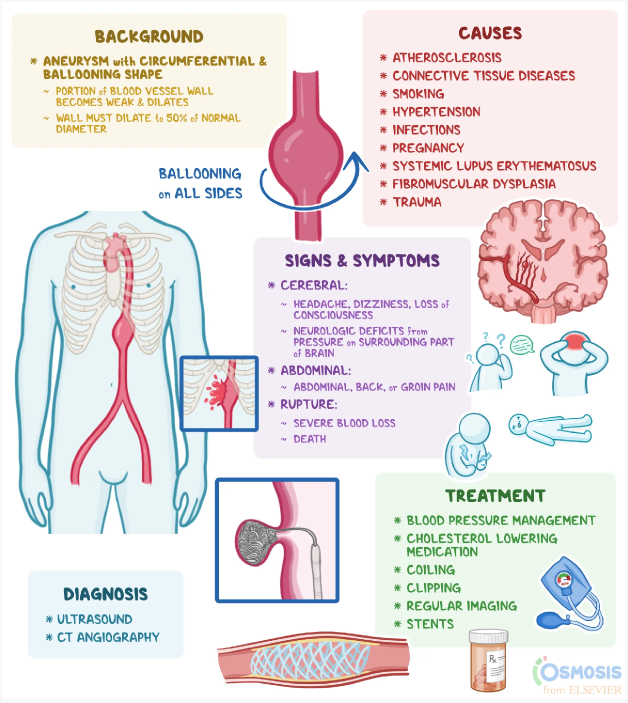
The client is diagnosed with an abdominal aortic aneurysm. Which statement would the nurse expect the client to make during the admission assessment?
“I have stomach pain every time I eat a big, heavy meal."
“I don't have any abdominal pain or any type of problems."
“I have periodic episodes of constipation and then diarrhea."
“I belch a lot especially when I lay down after eating"
The Correct Answer is B
Abdominal aortic aneurysms (AAA) often do not present with specific symptoms in the early stages. It is not uncommon for individuals with AAA to be asymptomatic or have vague symptoms. Therefore, the absence of abdominal pain or any problems related to the abdomen is a common finding during the assessment of a client with an abdominal aortic aneurysm.
Let's briefly review the other statements:
"I have stomach pain every time I eat a big, heavy meal": This statement is more suggestive of gastrointestinal issues such as indigestion or acid reflux rather than specifically related to an abdominal aortic aneurysm.
"I have periodic episodes of constipation and then diarrhea": This statement may indicate gastrointestinal issues, but it is not a typical symptom associated with an abdominal aortic aneurysm. AAA is primarily related to the aorta, the main blood vessel in the abdomen, and its symptoms are not directly linked to bowel function.
"I belch a lot, especially when I lay down after eating": This statement suggests gastrointestinal symptoms such as acid reflux or gastroesophageal reflux disease (GERD). While these symptoms may be unrelated to the abdominal aortic aneurysm itself, they can coexist with other conditions.
Nursing Test Bank
Naxlex Comprehensive Predictor Exams
Related Questions
Correct Answer is A
Explanation
Absent bilateral pedal pulses indicate a potential vascular complication, such as impaired circulation or blood flow to the lower extremities. It may suggest compromised perfusion and could be a sign of arterial occlusion or thrombosis, which requires immediate intervention. The nurse should notify the healthcare provider promptly to assess the client's condition and initiate appropriate interventions to restore circulation to the lower extremities.
While complaints of pain at the site of the incision are significant, post-operative pain is expected after abdominal surgery. The nurse should assess the pain and provide appropriate pain management interventions, but it may not require immediate intervention unless the pain is severe or accompanied by other concerning symptoms.
A distended, tender abdomen could indicate various post-operative complications, such as bowel obstruction or peritonitis. Although it should be evaluated and reported to the healthcare provider, it may not require immediate intervention unless the client's condition deteriorates or other signs of a surgical emergency are present.
An elevated temperature of 100°F (37.8°C) alone, without other signs of infection or systemic complications, may not necessarily require immediate intervention. It could be a normal response to surgery or a mild post-operative infection. The nurse should monitor the client's temperature and assess for other signs of infection, and if necessary, report it to the healthcare provider for further evaluation.
Correct Answer is D
Explanation
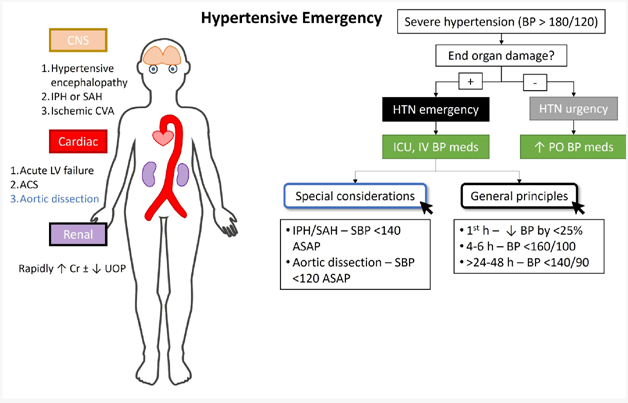
The client reports a headache with pain at level 5 of 10.: While a headache can be a symptom of high blood pressure, a pain level of 5 out of 10 alone does not indicate an immediate life-threatening condition. It is important to assess and manage the client's pain, but it may not be the most critical finding to report in this situation.
The client has epistaxis after blowing his nose several times. : Epistaxis, or a nosebleed, can occur due to high blood pressure, but it is not the most urgent or critical symptom in a hypertensive emergency. While it is essential to address the nosebleed and monitor blood pressure, other symptoms may indicate more severe consequences of uncontrolled high blood pressure.
The client has a urine output of 120 mL over 4 hours.: While decreased urine output can be a concerning sign, it is not the most significant finding to report in a hypertensive emergency. In this scenario, the focus is on acute complications related to high blood pressure, such as organ damage or impending stroke, which require immediate attention.
In summary, the finding that is most important to report to the healthcare provider in a client with a hypertensive emergency is the presence of new-onset blurry vision and facial asymmetry. These symptoms suggest potential neurological involvement and the need for urgent medical intervention to prevent serious complications like stroke.
Whether you are a student looking to ace your exams or a practicing nurse seeking to enhance your expertise , our nursing education contents will empower you with the confidence and competence to make a difference in the lives of patients and become a respected leader in the healthcare field.
Visit Naxlex, invest in your future and unlock endless possibilities with our unparalleled nursing education contents today