
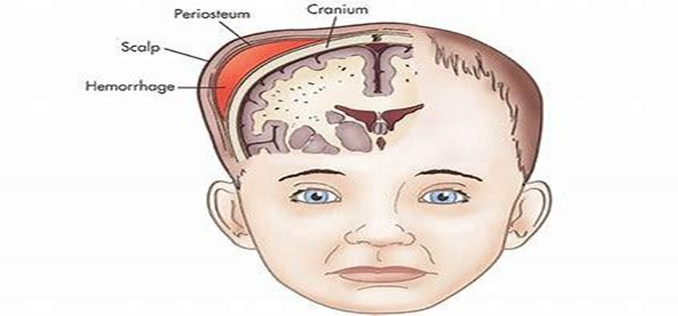
The nurse is performing a newborn assessment and evaluates a collection of blood beneath the newborn's scalp that does not cross the suture lines. The nurse documents this finding as
Sinciput
Occiput posterior
Caput succedaneum
Cephalohematoma
The Correct Answer is D
D. Cephalohematoma is another condition seen in newborns involving the collection of blood beneath the periosteum of the infant's skull bones. Unlike caput succedaneum, cephalohematoma does not cross suture lines because it is confined by the edges of a single cranial bone.
A. Sinciput refers to the anterior part of the fetal skull. It is not a term used to describe any specific condition or abnormality of the newborn scalp.
B. Occiput posterior refers to the position of the baby's head during labor and delivery, where the back of the baby's head (occiput) is towards the mother's posterior pelvis. It does not describe a scalp condition.
C. Caput succedaneum is a common condition in newborns characterized by swelling or edema of the scalp that crosses suture lines. It typically occurs due to pressure against the mother's cervix or vaginal wall during labor. The swelling is fluid collection beneath the scalp skin and often resolves within a few days without treatment.
Nursing Test Bank
Naxlex Comprehensive Predictor Exams
Related Questions
Correct Answer is D
Explanation
D. Initiating IV access is the priority nursing action in this scenario. IV access is crucial for administering fluids and medications promptly to stabilize the client's blood pressure, address potential hemorrhage, and prepare for possible surgical intervention. This step is essential for maternal stabilization and preparation for further management.
A. This action may be necessary if the client requires preparation for an emergency cesarean section. However, it is not the priority at this moment because it does not address the immediate stabilization of the client's condition.
B. While managing urinary output is important, inserting a urinary catheter is not the priority in this situation. The client's vital signs and the nature of bleeding suggest a more urgent need for assessment and intervention related to potential hemorrhage and maternal stabilization.
C. This action is premature until the decision for surgery is confirmed. Informed consent for surgery is essential if a cesarean section is deemed necessary, but first, the client's condition needs to be assessed and stabilized.
Correct Answer is C
Explanation
C. The position of the uterine fundus is crucial in the postpartum period. A fundus that is above the umbilicus suggests that the uterus is beginning to involute, which is a normal process after childbirth. At 8 hours, however, the uterus should be slightly below the umbilicus. A full bladder displaces the uterus making it perceptible higher than normal.
A. Lochia rubra refers to the bright red vaginal discharge that occurs immediately after childbirth. While the amount and color of lochia are important to assess for postpartum bleeding, they do not directly indicate the need for the client to urinate.
B. Blood pressure within normal limits does not necessarily indicate the need to urinate. However, hypertension (high blood pressure) or hypotension (low blood pressure) can sometimes be associated with complications that might affect urinary function.
D. Swelling of the labia can occur due to increased blood flow to the pelvic area during and after childbirth. It can also result from trauma during delivery. Labial swelling itself does not indicate the need to urinate but should be monitored for potential complications such as hematoma or infection.
Whether you are a student looking to ace your exams or a practicing nurse seeking to enhance your expertise , our nursing education contents will empower you with the confidence and competence to make a difference in the lives of patients and become a respected leader in the healthcare field.
Visit Naxlex, invest in your future and unlock endless possibilities with our unparalleled nursing education contents today