
The nurse is providing instructions about how to treat a sprained ankle. What statement by the mother does the nurse recognize as indicative of a need for additional teaching?
"Put an ice pack on the ankle, alternating 20 minutes on with 20 minutes off."
"Wrap the ankle in an Ace bandage for support."
"Keep the leg elevated when sitting"
"Apply warm compresses to the ankle for the first 24 hours."
The Correct Answer is D
D. Warm compresses or heat therapy are not recommended for the initial management of a sprained ankle, especially within the first 24 hours. Heat can increase blood flow and exacerbate swelling and inflammation, which may worsen pain and delay healing.
A. Applying ice packs in this manner helps reduce inflammation and swelling, which are common after a sprain. Alternating ice application with periods of rest allows for effective cooling without causing tissue damage.
B. Wrapping the ankle in an Ace bandage can provide compression and support, which may help reduce swelling and stabilize the joint during the healing process. However, it's important not to wrap the bandage too tightly, as this can impair circulation.
C. Elevating the leg when sitting helps reduce swelling by promoting venous return and preventing fluid accumulation in the injured area. Keeping the ankle elevated above the level of the heart whenever possible is recommended for optimal swelling reduction.
Nursing Test Bank
Naxlex Comprehensive Predictor Exams
Related Questions
Correct Answer is C
Explanation
C. Muscle weakness and lack of coordination contribute to difficulties with balance and coordination, leading to frequent falls and clumsiness in children with DMD.
A. DMD typically presents with symptoms such as difficulty climbing stairs, a waddling gait, and calf muscle hypertrophy, rather than atrophy.
B. Delayed fine-motor development is not a typical manifestation of Duchenne muscular dystrophy. DMD primarily affects muscle strength and function rather than fine motor skills.
D. Ambulating by holding onto furniture is not typical in Duchenne muscular dystrophy. As the disease progresses, children with DMD typically experience difficulty walking and may eventually require the use of assistive devices such as wheelchairs or orthoses for mobility.
Correct Answer is D
Explanation
D The forward bending test, also known as the Adam's forward bend test, is commonly used to screen for idiopathic scoliosis. During this test, the child is instructed to bend forward from the waist with their arms hanging downward and palms touching or overlapping. This position allows the nurse to observe the child's back for asymmetry, rib humps, or other signs of spinal curvature characteristic of scoliosis.
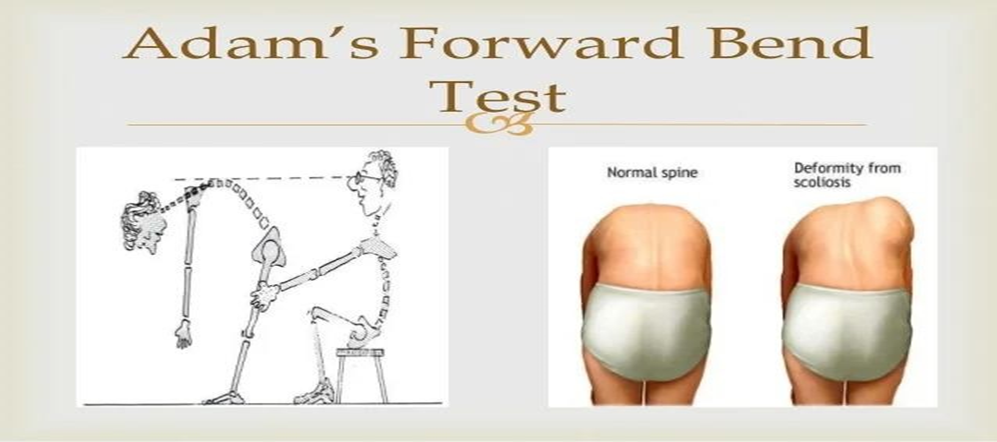
A This position may be used for certain examinations, such as assessing the spine's curvature but it is not typically the position used for screening for idiopathic scoliosis.
B This instruction involves cervical spine movement and is not relevant to screening for idiopathic scoliosis. It may be part of a different examination, such as assessing cervical spine range of motion or neurological function, but it does not aid in detecting scoliosis.
C Turning to the side and remaining relaxed may not provide adequate visualization of the spine's curvature, which is essential for scoliosis screening. Additionally, this position does not allow for proper assessment of the spine's alignment.
Whether you are a student looking to ace your exams or a practicing nurse seeking to enhance your expertise , our nursing education contents will empower you with the confidence and competence to make a difference in the lives of patients and become a respected leader in the healthcare field.
Visit Naxlex, invest in your future and unlock endless possibilities with our unparalleled nursing education contents today