
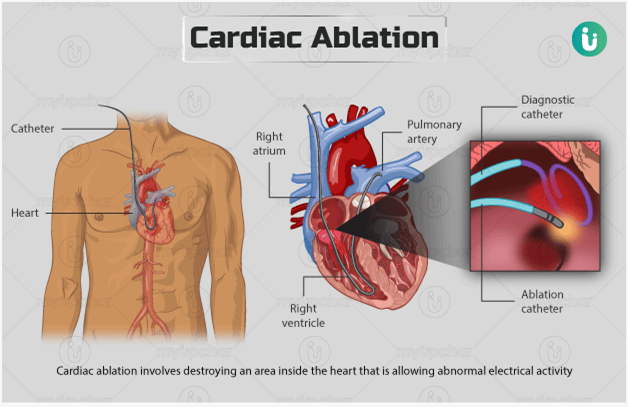
The nurse is teaching a client with atrial flutter who is scheduled for a catheter ablation? What should the nurse include in the teaching plan?
The procedure stimulates the growth of new pathways between the atria
The procedure uses cold therapy to stop the formation of the flutter waves
The procedure prevents or minimizes the patient's risk for sudden cardiac death
The procedure uses electrical energy to destroy areas of the conduction system
The Correct Answer is D
The procedure uses electrical energy to destroy areas of the conduction system: Catheter ablation is a minimally invasive procedure performed to treat abnormal heart rhythms, such as atrial flutter. During the procedure, a catheter is inserted into the heart and used to deliver electrical energy to specific areas of the heart tissue. This energy is used to destroy or ablate the abnormal conduction pathways that are causing the atrial flutter.
Let's go through the other options and explain why they are not accurate:
The procedure stimulates the growth of new pathways between the atria: Catheter ablation does not stimulate the growth of new pathways. Instead, it aims to eliminate or modify existing abnormal pathways in the heart to restore normal electrical conduction.
The procedure uses cold therapy to stop the formation of the flutter waves: Catheter ablation does not use cold therapy. It primarily utilizes radiofrequency energy or other sources of heat to ablate the targeted areas of the heart tissue.
The procedure prevents or minimizes the patient's risk for sudden cardiac death: While catheter ablation can be an effective treatment for certain arrhythmias, including atrial flutter, it is not primarily performed to prevent or minimize the risk of sudden cardiac death. Its main purpose is to restore normal heart rhythm and alleviate symptoms associated with the arrhythmia.
Nursing Test Bank
Naxlex Comprehensive Predictor Exams
Related Questions
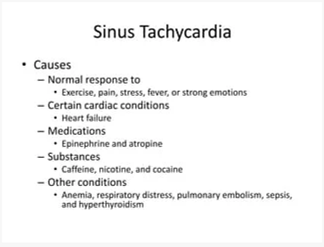
Correct Answer is ["B","C","D","E"]
Explanation
Pain level of 10 out of 10: Severe pain can stimulate the sympathetic nervous system and result in an increased heart rate.
Temperature 101.9°F: Fever can lead to an elevated heart rate as the body's response to infection or inflammation.
Hemoglobin: 7 g/dL: Low hemoglobin levels, known as anemia, can cause the heart to pump faster in an attempt to compensate for the decreased oxygen-carrying capacity of the blood.
Cocaine abuse: Cocaine is a stimulant drug that can significantly increase heart rate and cause tachycardia.
The following clinical finding would not typically be associated with tachycardia:
Blood glucose 90 mg/dL: While low or high blood glucose levels can cause symptoms, they are not directly associated with tachycardia unless they lead to significant physiological stress or hormonal imbalances.
Correct Answer is A
Explanation
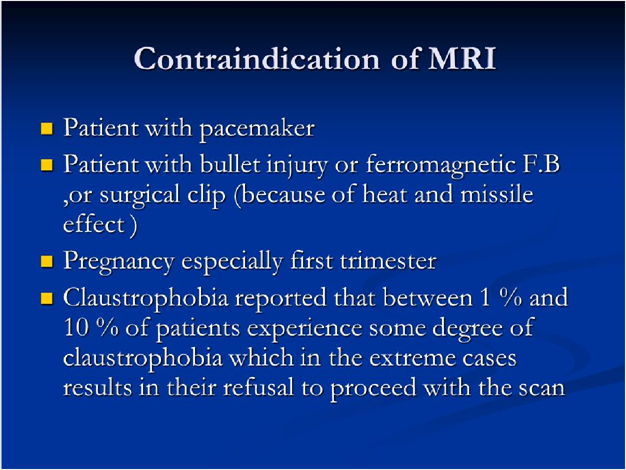
Having a permanent cardiac pacemaker is a significant factor that needs to be communicated to the health care provider before undergoing an MRI. Magnetic resonance imaging (MRI) uses powerful magnets, radio waves, and a computer to create detailed images of the body. The presence of a cardiac pacemaker can be a contraindication for undergoing an MRI because the strong magnetic field can potentially interfere with the functioning of the pacemaker or cause it to malfunction. It is crucial to assess the compatibility of the pacemaker with the MRI machine and to take appropriate precautions or make necessary arrangements to ensure the safety of the client during the procedure.
While the other pieces of information provided may be relevant to the client's overall health and medical history, they may not have a direct impact on the safety or feasibility of undergoing an MRI.
Whether you are a student looking to ace your exams or a practicing nurse seeking to enhance your expertise , our nursing education contents will empower you with the confidence and competence to make a difference in the lives of patients and become a respected leader in the healthcare field.
Visit Naxlex, invest in your future and unlock endless possibilities with our unparalleled nursing education contents today