
The red blood cells of type AB blood have on their surfaces:
Antigen B only.
Neither antigens A nor B
Antigen A only.
Antigens A and B
The Correct Answer is D
This is because blood type AB has both A and B antigens on the surface of red blood cells.
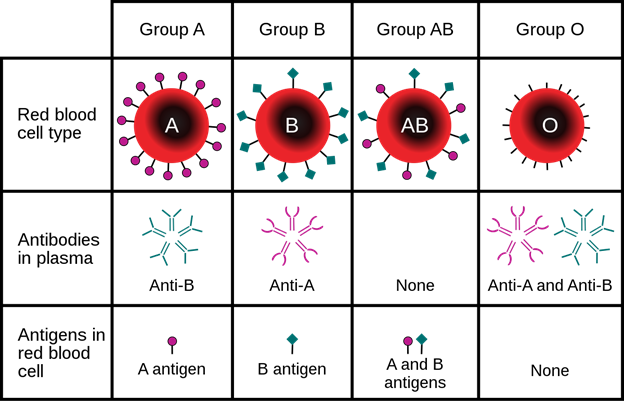
Antigens are protein molecules that can trigger an immune response if they are foreign to the body.
Choice A is wrong because antigen B only is present in blood type B.
Choice B is wrong because neither antigens A nor B are present in blood type O.
Choice C is wrong because antigen A only is present in blood type A.
Normal ranges for blood types vary by population, but according to the NHS, about 3% of people in the UK have blood type AB.
Nursing Test Bank
Naxlex Comprehensive Predictor Exams
Related Questions
Correct Answer is A
Explanation
The mitral valve lies between the left atrium and left ventricle and prevents the regurgitation of blood from the ventricle back into the atrium.
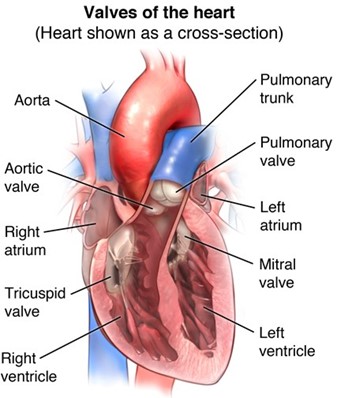
It has two leaflets that open and close to allow blood to flow from the lungs into the left atrium and then to the left ventricle.
Choice B is wrong because the tricuspid valve lies between the right atrium and right ventricle and prevents the regurgitation of blood from the ventricle back into the atrium.
It has three leaflets that open and close to allow blood to flow from the body into the right atrium and then to the right ventricle.
Choice C is wrong because the pulmonary valve lies between the right ventricle and the pulmonary artery and prevents the regurgitation of blood from the artery back into the ventricle.
It has three leaflets that open and close to allow blood to flow from the right ventricle to the lungs, where it picks up oxygen.
Choice D is wrong because the aortic valve lies between the left ventricle and the aorta and prevents the regurgitation of blood from the aorta back into the ventricle.
It has three leaflets that open and close to allow blood to flow from the left ventricle to the rest of the body.
Correct Answer is C
Explanation
The conversion of fibrinogen to fibrin by thrombin is the final step in the formation of a blood clot.
Fibrin is a protein that forms a net-like structure that traps platelets and other blood cells, making the clot stronger and more durable.
Choice A is wrong because the formation of a prothrombin activator is the first step in the formation of a blood clot.
A prothrombin activator is a complex of enzymes that converts prothrombin to thrombin.
Choice B is wrong because the conversion of prothrombin to thrombin by the prothrombin activator is the second step in the formation of a blood clot.
Thrombin is an enzyme that converts fibrinogen to fibrin.
Choice D is wrong because tissue damage is not a step in the formation of a blood clot, but a trigger for the clotting process.
When blood vessels are injured, they release substances that activate platelets and clotting factors.
Whether you are a student looking to ace your exams or a practicing nurse seeking to enhance your expertise , our nursing education contents will empower you with the confidence and competence to make a difference in the lives of patients and become a respected leader in the healthcare field.
Visit Naxlex, invest in your future and unlock endless possibilities with our unparalleled nursing education contents today