
What is the nurse's priority assessment for a patient with borderline personality disorder?
Suicidal or homicidal ideations
Sleep patern changes
Impulsive behaviours
Only support systems
The Correct Answer is A
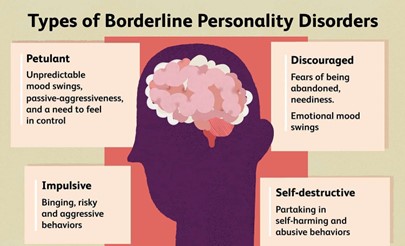
Borderline personality disorder is a serious mental illness characterized by instability in mood, behaviour, and self-image. Patients with borderline personality disorder are at a high risk of self-harm, suicide, and impulsive behaviours. Therefore, the nurse's priority assessment should be to identify any suicidal or homicidal ideations, as these can be life-threatening emergencies. Once identified, appropriate interventions should be initiated, such as suicide precautions, crisis management, and referral to mental health professionals for further evaluation and treatment.
While sleep patern changes, impulsive behaviours, and support systems are also important aspects to assess in patients with borderline personality disorder, they are not the priority when compared to suicidal or homicidal ideations.
Nursing Test Bank
Naxlex Comprehensive Predictor Exams
Related Questions
Correct Answer is C
Explanation
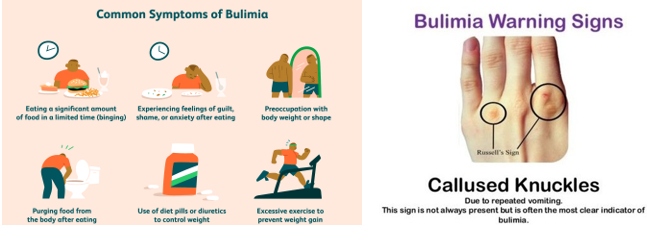
Russell’s sign is a physical symptom that is associated with bulimia nervosa. It refers to the presence of calluses on the knuckles or back of the hand that are caused by repeated self-induced vomiting.
Option a. Very low BMI is not typically associated with bulimia nervosa. People with bulimia nervosa may have a normal or above-normal BMI.
Option b. Decreased size of parotid glands is not associated with bulimia nervosa. In fact, people with bulimia nervosa may have an enlarged parotid gland due to repeated vomiting.
Option d. Fluid and electrolyte overload is not typically associated with bulimia nervosa. People with bulimia nervosa may experience fluid and electrolyte imbalances due to repeated vomiting and laxative abuse.
Correct Answer is C
Explanation
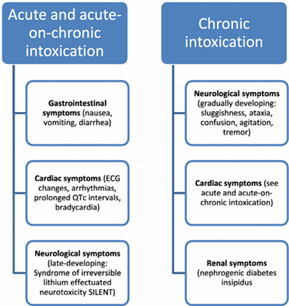
Diarrhea, vomiting, and drowsiness are potential signs of lithium toxicity, which can be a serious and potentially life-threatening condition. If a client who is being treated with lithium carbonate develops these symptoms, the nurse should notify the health care provider immediately and hold the next dose of medication until new orders are received from the provider.
Option a. Hold the medication and refuse to administer additional doses for 3 days is not an appropriate action because it does not involve notifying the health care provider or obtaining new orders.
Option b. Notify the health care provider immediately and give 4 liters of fluids is not an appropriate action because it involves administering fluids without obtaining orders from the health care provider.
Option d. Document the client’s symptoms and continue with medication as prescribed is not an appropriate action because it does not involve notifying the health care provider or holding the next dose of medication.
Whether you are a student looking to ace your exams or a practicing nurse seeking to enhance your expertise , our nursing education contents will empower you with the confidence and competence to make a difference in the lives of patients and become a respected leader in the healthcare field.
Visit Naxlex, invest in your future and unlock endless possibilities with our unparalleled nursing education contents today