
When measuring the size, depth, and wound tunneling of a client's stage 4 pressure injury, what action should the nurse perform first?
Perform hand hygiene.
Assess the condition of the visible wound bed.
Measure the width of the wound with a disposable ruler.
Insert a swab into the wound at 90 degrees.
The Correct Answer is A
Choice A rationale: Performing hand hygiene before any wound care procedure is essential to prevent infection and maintain aseptic technique.
Choice B rationale: Assessing the condition of the visible wound bed is an important step but not the first action. Hand hygiene should precede any assessment or intervention.
Choice C rationale: Measuring the width of the wound with a disposable ruler is part of the wound measurement process but should follow hand hygiene.
Choice D rationale: Inserting a swab into the wound at 90 degrees is not the first step. Hand hygiene and assessment should precede any invasive procedures.
Nursing Test Bank
Naxlex Comprehensive Predictor Exams
Related Questions
Correct Answer is B
Explanation
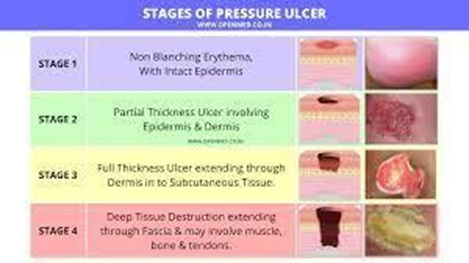
Choice A rationale: Stage III pressure ulcers involve full-thickness tissue loss with visible fat but do not extend to the underlying muscle.
Choice B rationale: Stage IV pressure ulcers involve full-thickness tissue loss with exposed muscle, bone, or other structures.
Choice C rationale: Stage II pressure ulcers involve partial-thickness skin loss but do not extend into the deeper layers.
Choice D rationale: Unstageable ulcers have a base covered by slough or eschar, making it difficult to assess the depth of tissue involvement. In this case, the wound's base is described as muscle, indicating a stage IV pressure ulcer.
Correct Answer is ["B","C","E"]
Explanation
Choice A rationale: A physician's order is typically required for a digital removal of a fecal impaction.
Choice B rationale: Using a lubricated index finger to break up some of the mass and remove it is a correct step in the procedure.
Choice C rationale: Sterile gloves are not required for a digital removal of a fecal impaction. Clean gloves are generally sufficient.
Choice D rationale: The mass may need to be broken up into smaller pieces for removal, rather than being removed as a whole.
Choice E rationale: The patient is usually positioned in a side-lying position for comfort and accessibility during the procedure.
Whether you are a student looking to ace your exams or a practicing nurse seeking to enhance your expertise , our nursing education contents will empower you with the confidence and competence to make a difference in the lives of patients and become a respected leader in the healthcare field.
Visit Naxlex, invest in your future and unlock endless possibilities with our unparalleled nursing education contents today