
Which of the following hormones is regulated through a negative feedback mechanism to maintain blood glucose levels?
Thyroxine
Adrenaline
Oxytocin
Insulin
The Correct Answer is D
A. Thyroxine: Although thyroxine (T4) is regulated by a negative-feedback loop in the hypothalamic-pituitary-thyroid axis (TRH → TSH → T4/T3), its primary role is regulation of metabolism rather than direct, minute-to-minute control of blood glucose. It can influence glucose metabolism over time but is not the main hormone for acute blood glucose homeostasis.
B. Adrenaline: Adrenaline (epinephrine) increases blood glucose by stimulating glycogenolysis and gluconeogenesis during stress or “fight-or-flight.” Its release is driven largely by sympathetic nervous system activation (a feedforward/acute stress response), not by a classic negative-feedback loop aimed at maintaining steady blood glucose.
C. Oxytocin: Oxytocin is regulated by neural reflexes and some feedback mechanisms (notably positive feedback during labor), and it primarily influences uterine contraction and milk let-down. It is not involved in blood glucose regulation.
D. Insulin: Insulin is the primary hormone that reduces blood glucose and is tightly regulated by a negative-feedback mechanism: rising blood glucose stimulates insulin release from pancreatic β-cells; insulin lowers blood glucose (by promoting cellular uptake and storage), which then reduces the stimulus for further insulin secretion.
Nursing Test Bank
Naxlex Comprehensive Predictor Exams
Related Questions
Correct Answer is A
Explanation
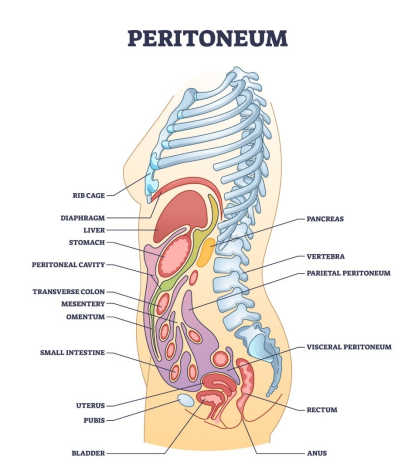
A. Providing support and reducing friction:The peritoneum is a continuous serous membrane that lines the abdominal cavity and covers the abdominal organs. It secretes a lubricating serous fluid that allows organs to glide against each other without friction during digestion and movement. It also helps suspend organs in place via folds (mesenteries).
B. Producing digestive enzymes:Digestive enzymes are primarily produced by the glandular organs such as the pancreas, salivary glands, stomach lining, and the small intestine, not the peritoneal membrane.
C. Storing bile:Bile is produced by the liver and stored/concentrated in the gallbladder.
D. Filtering waste products:The filtration of waste products from the blood is the primary function of the kidneys(and to a metabolic extent, the liver), not the peritoneum.
Correct Answer is D
Explanation
A. Enteric nervous system:The Enteric nervous system is a mesh-like system of neurons that governs the function of the gastrointestinal tract (the "brain of the gut"). It manages digestion, not the systemic stress response.
B. Central nervous system:While the brain (specifically the hypothalamus and amygdala) perceives the threat, the execution of the physiological "fight or flight" changes (racing heart, dilated pupils) is carried out by the autonomic nerves.
C. Peripheral nervous system:Similar to Question 45, this is a broad anatomical term. While the stress response nerves are located in the periphery, the specific functional system is the Autonomic Nervous System.
D. Autonomic nervous system:The Autonomic Nervous System has two main branches: the Sympatheticand the Parasympathetic. The Sympathetic division is directly responsible for the "fight or flight" response, mobilizing the body's energy during stress.
Whether you are a student looking to ace your exams or a practicing nurse seeking to enhance your expertise , our nursing education contents will empower you with the confidence and competence to make a difference in the lives of patients and become a respected leader in the healthcare field.
Visit Naxlex, invest in your future and unlock endless possibilities with our unparalleled nursing education contents today