
Which is assessed with Tanner staging?
Growth hormone secretion
Hormone levels
Hyperthyroidism
Secondary sex characteristic
The Correct Answer is D
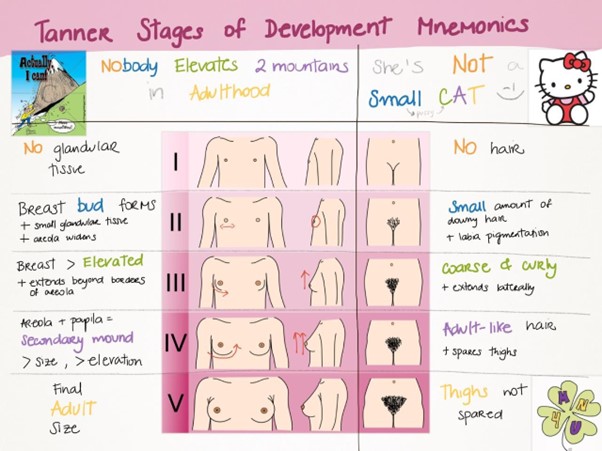
Tanner staging is a method used to assess and describe the development of secondary sex characteristics during puberty. It is primarily focused on the physical changes that occur as individuals transition from childhood to adulthood. The Tanner scale consists of different stages (I to V) that describe the development of specific secondarysex characteristics such as breast development, pubic hair growth, genital development, and facial hair growth.
Growth hormone secretion in (option A) is incorrect because While growth hormone does play a role in the overall growth and development of individuals during puberty, Tanner staging does not specifically measure or assessgrowth hormone secretion.
Hormone levels in (option B) is incorrect because While hormone levels, including sex hormones such as estrogenand testosterone, do play a significant role in the development of secondary sex characteristics, Tanner staging itself does not involve measuring or assessing hormone levels. Hormone levels can be assessed through laboratory testing, but this is a separate process from Tanner staging
Hyperthyroidism in (option C) is incorrect because Hyperthyroidism, on the other hand, is a medical condition characterized by an overactive thyroid gland that produces an excessive number of thyroidhormones. It is not directly related to the development of secondary sex characteristics. Diagnosing hyperthyroidism typically involves assessing symptoms, conducting physicalexaminations, and performing specific blood tests to measure thyroid hormone levels and evaluate thyroidfunction.
Nursing Test Bank
Naxlex Comprehensive Predictor Exams
Related Questions
Correct Answer is C
Explanation
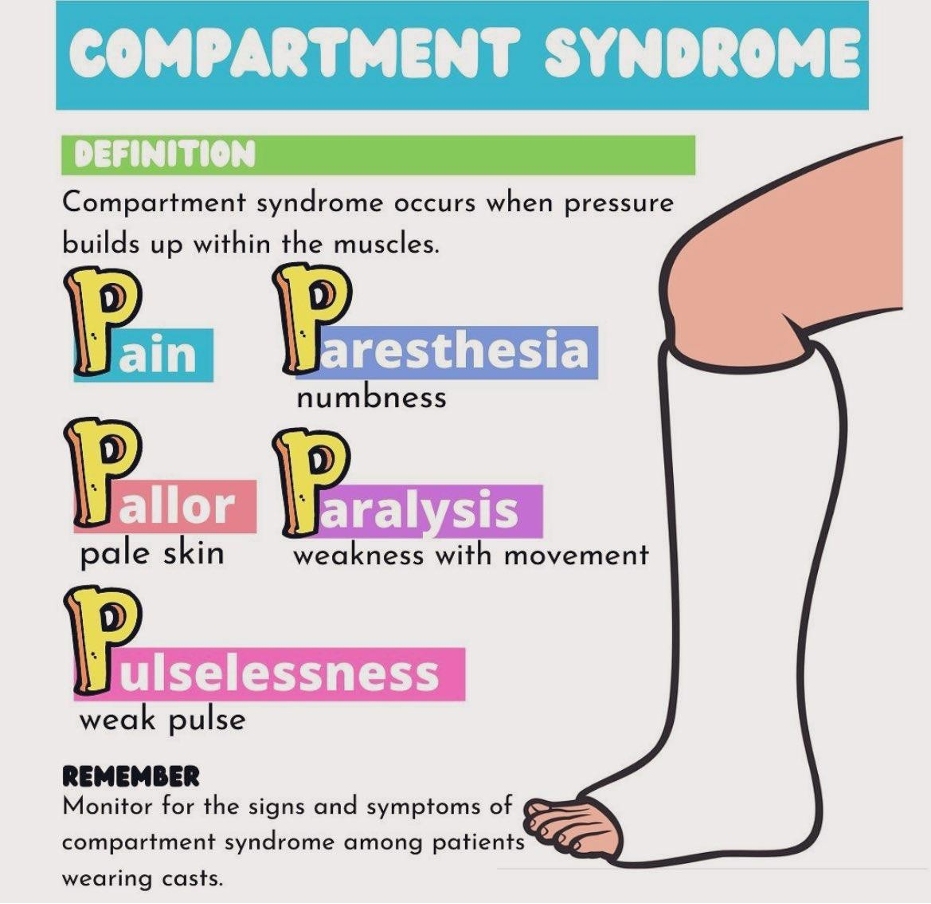
Compartment syndrome is a condition that can occur following an injury, such as a fracture, where there is increased pressure within a closed space (compartment) in the body. In the case of a forearm fracture, swelling and increased pressure within the compartment can lead to compression of the nerves and blood vessels, resulting in symptoms such as pain, numbness, and decreased function of the affected muscles.
The inability to extend the fingers suggests impairment of the extensor muscles, which are innervated by the radial nerve. If the radial nerve is compressed or injured due to compartment syndrome, it can result in a loss of function in the muscles it innervates, leading to the inability to extend the fingers.
damage to the epiphyseal plate in (option A) is incorrect because it, is not related to the inability to extend the fingers. The epiphyseal plate is the growth plate in long bones, and damage to it would typically affect bone growth rather than finger extension.
, stating that it is normal following this type of injury in (option B), is incorrect. Inability to extend the fingers is not a normal or expected finding after a forearm fracture. It suggests a potential complication or underlying issue.
fat embolism in (option D) is incorrect because it, is unlikely to cause an inability to extend the fingers. Fat embolism occurs when fat globules from a broken bone enter the bloodstream and can lead to respiratory and neurological symptoms, but it would not specifically cause an isolated loss of finger extension.
Correct Answer is C
Explanation
Upper extremity fractures in children commonly occur as a result of falls. Children are more prone to falls due to their developing motor skills, balance, and coordination. They may fall from playground equipment, bicycles, or simply while running or playing.
While sports injuries (Option A) can also lead to upper extremity fractures, falls are generally the most common cause in children.
Physical abuse (Option B) is an unfortunate possibility in some cases, but it is important to approach the assessment without assuming abuse as the cause without appropriate evidence or disclosure.
Upper extremity fractures resulting from automobile crashes (Option D) are less common in children compared to falls or sports injuries, although they can occur in severe accidents.
It is always important for the nurse to assess the child's history, obtain a detailed account of the injury, and consider any additional signs or indications that may suggest non-accidental trauma if appropriate.
Whether you are a student looking to ace your exams or a practicing nurse seeking to enhance your expertise , our nursing education contents will empower you with the confidence and competence to make a difference in the lives of patients and become a respected leader in the healthcare field.
Visit Naxlex, invest in your future and unlock endless possibilities with our unparalleled nursing education contents today