
Which statement is TRUE about how air enters the lungs?
When the air diffuses through the lung tissue, the adjoining air replaces the diffused air in the lungs.
The pressure of the air in the bronchus blows open the bronchioles causing air to move into the lungs.
When the lungs expand, the pressure inside the lungs becomes negative compared to the atmospheric pressure causing air to enter the lung
The muscles of the diaphragm contract causing a sympathetic constriction of the lungs and resultant movement of air.
The Correct Answer is C
This is how Inhalation Works:
Inhalation is the process of drawing air into the lungs. Here's a step-by-step explanation:
Diaphragm and Intercostal Muscle Contraction:
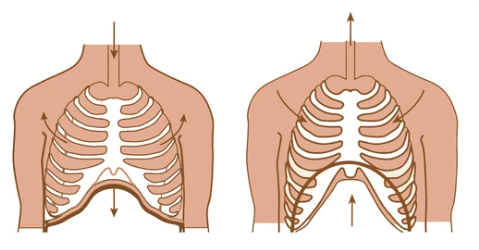
The diaphragm (a dome-shaped muscle located at the base of the lungs) contracts and moves downward.
The intercostal muscles (muscles between the ribs) contract, pulling the ribcage upward and outward.
Expansion of the Thoracic Cavity:
The contraction of these muscles increases the volume of the thoracic cavity (the chest area).
As the thoracic cavity expands, the pleural cavity (the space between the lung and chest wall) also expands.
Creation of Negative Pressure:
The expansion of the thoracic cavity reduces the pressure within the lungs.
This pressure is now lower than the atmospheric pressure (pressure of the air outside the body).
Air Flow into the Lungs:
Due to the negative pressure, air flows from the higher atmospheric pressure outside the body into the lower pressure inside the lungs.
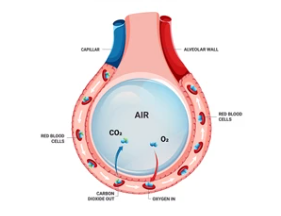
Air travels through the trachea (windpipe), into the bronchi (two main air passages into the lungs), and finally into the alveoli (tiny air sacs where gas exchange occurs).
Nursing Test Bank
Naxlex Comprehensive Predictor Exams
Related Questions
Correct Answer is ["A","B","C","D"]
Explanation
Choice A reason:
Supportive friends and family members play a crucial role in the recovery process for individuals with depression. Social support can provide emotional comfort, reduce feelings of isolation, and encourage adherence to treatment plans. Having a strong support network can significantly improve mental health outcomes.
Choice B reason:
Attending outpatient therapy or a partial hospital program offers structured support and treatment for individuals with depression. These programs provide access to mental health professionals, group therapy, and other therapeutic activities that can help manage symptoms and promote recovery. They offer a higher level of care than standard outpatient visits but do not require full hospitalization.
Choice C reason:
Consistent daily structure and exercise that is not overwhelming can help manage depression by providing routine and physical activity. Regular exercise has been shown to improve mood, reduce anxiety, and increase overall well-being. Establishing a daily routine can also help individuals with depression feel more in control and reduce feelings of chaos or unpredictability.
Choice D reason:
A well-balanced diet and restful sleep are essential components of mental health. Proper nutrition supports brain function and overall health, while adequate sleep is crucial for emotional regulation and cognitive function. Addressing these basic needs can help improve mood and energy levels, making it easier to cope with depression.
Correct Answer is C
Explanation
Neurons, or brain cells, are highly specialized cells responsible for transmitting information throughout the nervous system. Unlike other cells in the body, neurons do not store glucose in the form of glycogen. This characteristic makes them heavily reliant on a continuous and stable supply of glucose from the bloodstream to meet their energy demands. Here's a detailed explanation:
The Role of Glucose in Neurons
- Energy Demand: Neurons have a high energy demand due to their role in maintaining electrical gradients, neurotransmitter synthesis, and signal transmission. The primary source of energy for neurons is glucose.
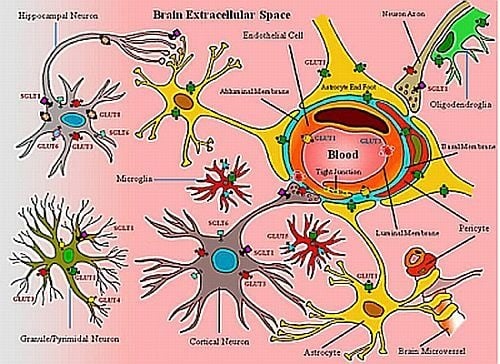
- Blood-Brain Barrier: Glucose is transported from the bloodstream to the brain through the blood-brain barrier, a selective barrier that regulates the passage of substances into the brain. Specialized glucose transporters, primarily GLUT1 and GLUT3, facilitate the uptake of glucose into neurons.
- Glycolysis and ATP Production: Once inside the neuron, glucose undergoes glycolysis, a metabolic pathway that breaks down glucose to produce ATP (adenosine triphosphate), the energy currency of the cell. The end product of glycolysis, pyruvate, enters the mitochondria where it is further oxidized in the Krebs cycle and oxidative phosphorylation to produce more ATP.
Lack of Glycogen Storage in Neurons
No Glycogen Reserves: Unlike liver and muscle cells, neurons do not have significant glycogen stores. Glycogen is a stored form of glucose that can be mobilized during periods of low blood glucose levels. Neurons lack this storage capacity, making them highly dependent on a continuous supply of glucose from the blood.
Importance of Continuous Blood Flow
Constant Supply Needed: Due to their inability to store glucose, neurons require a constant supply of glucose from the bloodstream. Any interruption in blood flow, such as during a stroke or hypoglycemia, can quickly lead to energy depletion and neuronal dysfunction or death.
Physiological Implications
Ischemia and Hypoglycemia: Conditions that disrupt the delivery of glucose to the brain, such as ischemia (reduced blood flow) or hypoglycemia (low blood glucose levels), can have severe effects on neuronal function and survival. This highlights the critical need for maintaining adequate cerebral blood flow and glucose levels.
Whether you are a student looking to ace your exams or a practicing nurse seeking to enhance your expertise , our nursing education contents will empower you with the confidence and competence to make a difference in the lives of patients and become a respected leader in the healthcare field.
Visit Naxlex, invest in your future and unlock endless possibilities with our unparalleled nursing education contents today