
A charge nurse is making shift assignments on a medical-surgical unit. Which of the following tasks should the nurse assign to the AP?
Measuring oxygen saturation for a client who has dyspnea
Performing nasal hygiene for a client who has an NG tube
Pouching a client's ostomy bag for a new colostomy
Inserting a rectal suppository for a client who is vomiting
The Correct Answer is C
a. Measuring oxygen saturation requires nursing judgment and assessment skills, which are beyond the scope of practice for an assistive personnel (AP).
b. Nasal hygiene for a client with an NG tube involves specific skills and requires nursing assessment to ensure proper technique and patient comfort.
c. Pouching a client's ostomy bag involves routine care that can be safely performed by assistive personnel under the direction and supervision of a nurse.
d. Inserting a rectal suppository requires nursing judgment and assessment to determine appropriateness based on the client's condition, which is beyond the scope of practice for an AP.
Nursing Test Bank
Naxlex Comprehensive Predictor Exams
Related Questions
Correct Answer is C
Explanation
. Inform the client that she cannot leave without a discharge prescription from the provider
Rationale:
a. Offering a sedative may not address the client's concerns and is not an appropriate response to the situation.
b.Inform the client that she cannot leave without a discharge prescription from the provider. Clients have the right to leave against medical advice; informing them otherwise infringes on their rights.
C Have the client sign the Against Medical Advice form. This action respects the client's autonomy while ensuring documentation of her decision to leave against medical advice, which protects both the client and healthcare facility legally.
d. Assigning a security officer to the client's room may escalate the situation unnecessarily. The focus should be on communication and education.
Correct Answer is A
Explanation
a. In emergency situations where immediate treatment is necessary to stabilize the client and prevent further deterioration, obtaining written consent may not be feasible or necessary. The principle of implied consent applies in emergency situations where the client is unable to provide consent due to their condition.
b. Notifying risk management before initiating treatment is not necessary in this emergency situation, as the priority is to provide timely and appropriate care to the client.
c. Having the client sign a consent for treatment may not be possible if the client is disoriented or incapacitated due to their condition.
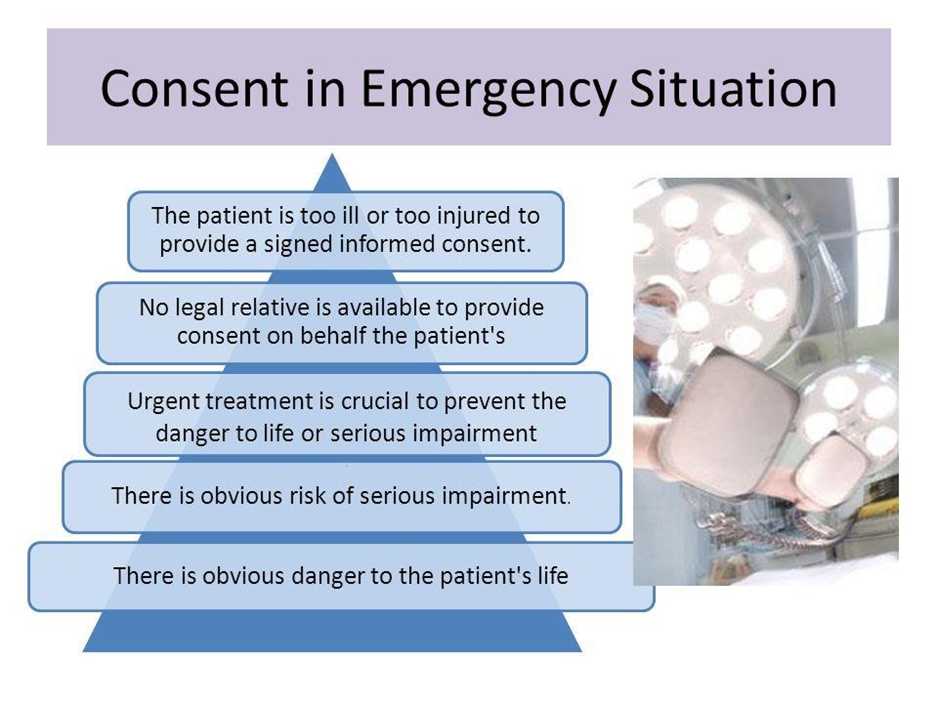
d. Contacting the client's next of kin to obtain consent may delay necessary treatment, which could be detrimental to the client's health in an emergency situation.
Whether you are a student looking to ace your exams or a practicing nurse seeking to enhance your expertise , our nursing education contents will empower you with the confidence and competence to make a difference in the lives of patients and become a respected leader in the healthcare field.
Visit Naxlex, invest in your future and unlock endless possibilities with our unparalleled nursing education contents today