
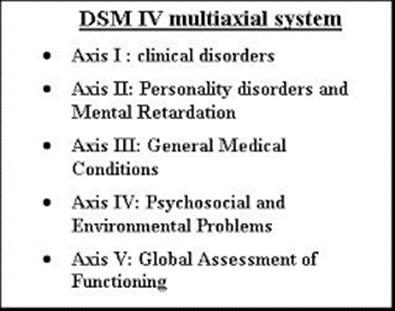
A client has borderline personality disorder. Which Axis will the nurse document this information?
Axis 1
Axis 3
Axis 4
AXIS 2
The Correct Answer is D
Choice A rationale: Axis 1 is used to document clinical disorders that are the primary focus of management such as schizophrenia, major depressive disorder, and bipolar disorder among others.
Choice B rationale: Axis 3 is used in the documentation of conditions, for instance, asthma, hypertension, and diabetes mellitus among others which are known to have effects on an individual’s mental health.
Choice C rationale: Axis 4 is used in the documentation of environmental and psychosocial issues contributing to a patient’s stress such as financial and family stressors.
Choice D rationale: this is accurate since Axis 2 is used in the documentation of conditions affecting a client’s functioning such as personality disorders and mental retardation.
Nursing Test Bank
Naxlex Comprehensive Predictor Exams
Related Questions
Correct Answer is {"dropdown-group-1":"C"}
Explanation
Antipsychotics are used in the management of patients with psychotic disorders such as schizophrenia, schizoaffective disorder, and delusional disorder. They include drugs such as olanzapine, clozapine, quetiapine, and risperidone.
Correct Answer is C
Explanation
Choice A rationale: High temperatures do not usually cause people to become calm unless they are suffering from heat exhaustion or heat stroke, which are medical emergencies.
Choice B rationale: depression is usually associated with low temperatures and reduced sunlight exposure rather than high temperatures.
Choice C rationale: high temperatures is associated with arousal and agitation in some individuals which may be due to the effects of heat on the individual’s nervous system, cardiovascular, and endocrine systems.
Choice D rationale: confusion is not usually associated with confusion. However, it may result in confusion in older adults and individuals with other underlying conditions.
Whether you are a student looking to ace your exams or a practicing nurse seeking to enhance your expertise , our nursing education contents will empower you with the confidence and competence to make a difference in the lives of patients and become a respected leader in the healthcare field.
Visit Naxlex, invest in your future and unlock endless possibilities with our unparalleled nursing education contents today