
A client in the clinic states, “I already told you I can’t come back on Friday.” Which response by a nurse would be likely to repair the client-nurse relationship?
“You don’t have to be rude about it. What day do you want?”.
“I apologize for not hearing you say that. Is there a better day for you?”.
“Nothing could be more important than your health. Arrange to come on Friday.”.
“Friday is really the best day.
The Correct Answer is B
“I apologize for not hearing you say that. Is there a better day for you?”.
This response shows empathy and respect for the client’s feelings and preferences.
It also invites the client to collaborate on finding a solution that works for both parties. Choice A is wrong because it is rude and defensive.
It does not acknowledge the client’s frustration or offer any alternatives. Choice C is wrong because it is dismissive and paternalistic.
It does not respect the client’s autonomy or consider the client’s reasons for not being able to come back on Friday.
Choice D is wrong because it is persuasive and manipulative.
It does not address the client’s concerns or explore other options.
The nurse-client relationship is based on trust, respect, and collaboration.
The nurse should use therapeutic communication skills to maintain a positive rapport with the client and promote their health and well-being.
Nursing Test Bank
Naxlex Comprehensive Predictor Exams
Related Questions
Correct Answer is A
Explanation
“It wouldn’t have mattered what you had worn.” This response by a nurse is appropriate because it validates the client’s feelings and helps to reduce self-blame. It also conveys that rape is not caused by the victim’s clothing or behavior, but by the perpetrator’s violence and lack of respect.
Choice B. “The current styles are an invitation to disaster.” is wrong because it implies that the client is responsible for the rape and that she could have prevented it by dressing differently. This response is judgmental and insensitive, and may increase the client’s guilt and shame.
Choice C. “Never mind about blame.
That will be determined by the court.” is wrong because it dismisses the client’s feelings and does not address her emotional needs.
It also suggests that the nurse does not believe the client or support her. This response may make the client feel isolated and distrustful.
Choice D. “Some people don’t have very good self-control.
We have to help them all we can.” is wrong because it excuses the perpetrator’s behavior and shifts the blame to the victim.
It also implies that rape is a result of sexual desire, rather than an act of violence and domination. This response may make the client feel powerless and helpless.
Correct Answer is A
Explanation
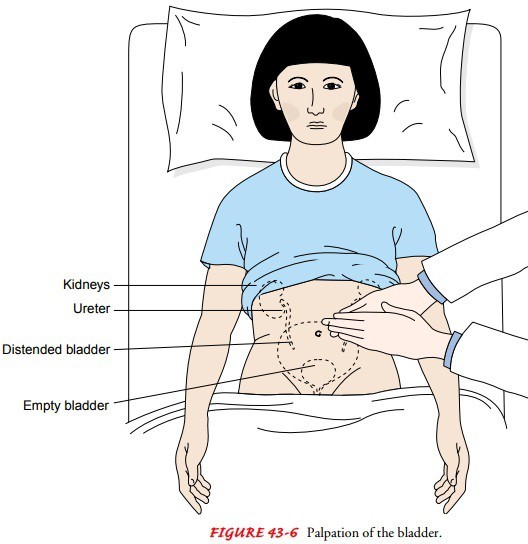
The nurse should first assess the client’s bladder for distention by palpating the lower abdomen between the symphysis pubis and the umbilicus.
This can indicate urinary retention, which is a common postoperative complication. The nurse should also measure the bladder volume using a bladder scanner if available.
Choice B. Inform the surgeon that the client’s status is wrong because the nurse should first assess the client before notifying the surgeon.
The surgeon may order interventions based on the assessment findings.
Choice C. Increasing the client’s fluid intake is wrong because increasing fluid intake may worsen bladder distention and discomfort.
The nurse should encourage fluid intake only after ensuring adequate urinary output.
Choice D. Administering pain medication is wrong because pain medication may not be indicated for urinary retention.
Pain medication may also cause urinary retention by relaxing the bladder muscles and impairing the micturition reflex.
Normal urine output is about 30 mL per hour or 240 mL in eight hours.
The nurse should monitor the client’s intake and output and report any signs of urinary retention to the surgeon.
Urinary retention can lead to infection, bladder damage, and renal impairment if not treated promptly.
Whether you are a student looking to ace your exams or a practicing nurse seeking to enhance your expertise , our nursing education contents will empower you with the confidence and competence to make a difference in the lives of patients and become a respected leader in the healthcare field.
Visit Naxlex, invest in your future and unlock endless possibilities with our unparalleled nursing education contents today