
A client is prescribed a cleansing enema. Prior to administering the enema, the client should be told to:
drink a full glass of water.
hold the solution for a couple of minutes.
take fast breaths through the nose.
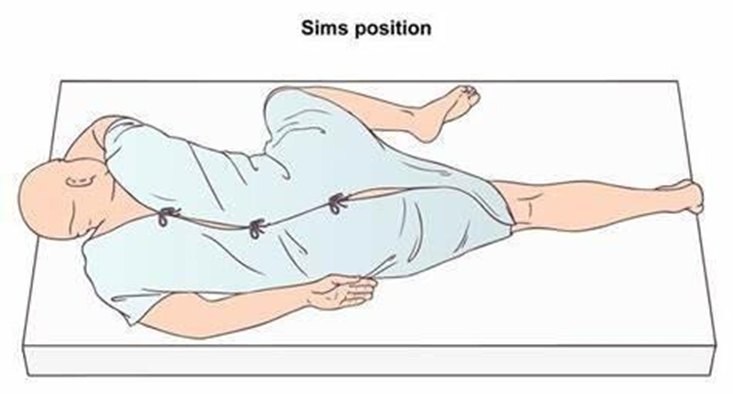
lie on the left side with the right knee bent
The Correct Answer is D
D. Before administering a cleansing enema, the client is typically instructed to assume a left-side lying position with the right knee bent. This position helps to facilitate the flow of the enema solution into the colon and allows for better retention of the solution. It also helps to prevent leakage and discomfort during the procedure.
A. Drinking water before administering an enema can help hydrate the client and promote normal bowel function. However, it is not typically a specific instruction related to the administration of the enema itself. Hydration is generally beneficial for bowel health but is not directly related to the enema procedure.
B. After administering the enema solution, the client should be instructed to hold the solution in the bowel for a sufficient amount of time to allow it to soften and loosen stool. The exact duration can vary based on the type and purpose of the enema, but typically, the client is encouraged to retain the solution for a specified period (as instructed by the healthcare provider) before evacuating.
C. This instruction is unrelated to the administration of a cleansing enema. Breathing techniques may be taught for relaxation or to manage discomfort during procedures, but they do not specifically apply to the process of administering an enema.
Nursing Test Bank
Naxlex Comprehensive Predictor Exams
Related Questions
Correct Answer is ["A","B","C","D","E"]
Explanation
A. Bathing can indeed foster a nurse-client relationship. It provides an opportunity for interaction and communication between the nurse and the client, promoting trust and rapport.
B Bathing can contribute to the client's overall sense of well-being. It promotes comfort, relaxation, and a feeling of cleanliness, which are important aspects of holistic care.
C. Bathing allows the nurse to visually assess the client's skin integrity. During the process, the nurse can identify any changes in skin color, presence of lesions, wounds, or other abnormalities that may require further assessment or intervention.
D. Bathing, particularly when accompanied by gentle massage or movement of limbs, can stimulate circulation. This helps improve blood flow to tissues, aiding in wound healing and reducing the risk of complications such as pressure ulcers.
E. Depending on the type of bath products used (e.g., moisturizing soap or bath oils), bathing can help moisturize the skin. This is especially beneficial for clients with dry skin or conditions that predispose them to skin dryness.
Correct Answer is B
Explanation
B. Activating a code blue or the facility's emergency response system will bring immediate assistance and resources to the client's bedside. This is crucial to initiate prompt resuscitative measures if indicated and to involve additional healthcare providers in the management of the emergency.
A. While it might be appropriate in some situations to provide privacy or support to the partner, in this urgent scenario where the client is unresponsive and not breathing, the priority should be immediate assessment and intervention for the client's condition.
C. While notifying the physician is important, especially to inform them of the client's condition and potentially discuss the DNR status, it is not the most immediate action in this urgent situation where the client is unresponsive and not breathing. Direct intervention and assessment are needed first.
D. Asking the partner to make a DNR decision immediately is not appropriate as the first action in this scenario. It is crucial to focus first on the client's immediate needs for assessment and potentially resuscitative measures if indicated. The discussion about the DNR order should occur in a timely manner but is secondary to addressing the client's current medical emergency.
Whether you are a student looking to ace your exams or a practicing nurse seeking to enhance your expertise , our nursing education contents will empower you with the confidence and competence to make a difference in the lives of patients and become a respected leader in the healthcare field.
Visit Naxlex, invest in your future and unlock endless possibilities with our unparalleled nursing education contents today