
A client receives a new prescription for levothyroxine. Which statement made by client indicates to the nurse that the education was effective?
Take medication on an empty stomach.
Avoid the use of iron supplements.
Administer levothyroxine at bedtime.
Consume foods that are high in iodine.
The Correct Answer is A
Levothyroxine is a thyroid hormone replacement medication used to treat hypothyroidism. To ensure proper absorption and effectiveness of the medication, it should be taken on an empty stomach, preferably in the morning, and at least 30 minutes before eating. Therefore, when the client indicates that they understand the need to take the medication on an empty stomach, it indicates that the education was effective.
Option b, "Avoid the use of iron supplements," is also important education for clients taking levothyroxine because iron supplements can interfere with the absorption of the medication. However, it is not the best indicator of effective education because the question asks for the statement that indicates education was effective, and option a is a more direct and specific response to the medication.
Option c, "Administer levothyroxine at bedtime," is not accurate information because the medication should be taken in the morning on an empty stomach.
Option d, "Consume foods that are high in iodine," is not recommended for clients taking levothyroxine because high amounts of iodine can interfere with thyroid function. Therefore, this statement indicates a need for further education.

Nursing Test Bank
Naxlex Comprehensive Predictor Exams
Related Questions
Correct Answer is C
Explanation
Ipratropium is a medication used to treat chronic obstructive pulmonary disease (COPD)1. When using an ipratropium inhaler for the first time or if it has not been used for a while, it is important to prime the inhaler by spraying it into the air away from your face1. However, the inhaler only needs to be primed with 2 sprays, not 71. If the client primes the inhaler with 7 pumps, it indicates that additional teaching is needed.

Correct Answer is C
Explanation
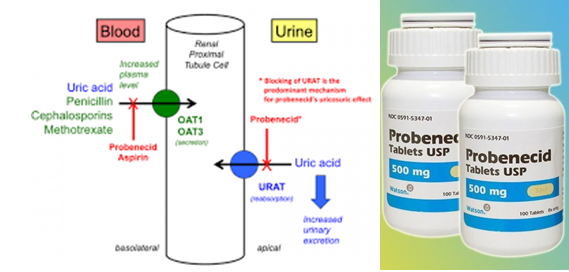
Probenecid is a uricosuric drug that works by inhibiting the reabsorption of uric acid in the kidneys and promotes its excretion in the urine. This drug is used to treat gout and hyperuricemia (high levels of uric acid in the blood). Therefore, the nurse should explain to the client that the purpose of probenecid is to promote the excretion of uric acid in the urine and lower the levels of uric acid in the blood, which can help prevent gout attacks and kidney stones.
Options a, b, and d are incorrect as they do not accurately describe the mechanism of action or purpose of probenecid.
Whether you are a student looking to ace your exams or a practicing nurse seeking to enhance your expertise , our nursing education contents will empower you with the confidence and competence to make a difference in the lives of patients and become a respected leader in the healthcare field.
Visit Naxlex, invest in your future and unlock endless possibilities with our unparalleled nursing education contents today