
A nurse in a provider's office is caring for a group of clients who have communicable diseases. Which of the following infections should the nurse report to the state health department?
Sarcoptes scabiei
Human papillomavirus
Neisseria gonorrhoeae
Impetigo contagiosa
The Correct Answer is C
Neisseria gonorrhoeae is a sexually transmitted infection that is reportable to public health authorities due to its potential for spreading rapidly within a population and its significant public health implications. Reporting cases of Neisseria gonorrhoeae infection allows for appropriate monitoring, treatment, and control measures to be implemented to prevent further transmission and protect public health.
Sarcoptes scabiei, which causes scabies, is a contagious skin infestation but is not typically a reportable condition to the state health department.
Human papillomavirus (HPV) is a common sexually transmitted infection, but it is not generally reportable unless it is associated with certain high-risk strains and leads to specific conditions such as cervical cancer.
Impetigo contagiosa, a bacterial skin infection, is not usually a reportable condition unless there is an outbreak or unusual circumstances warranting public health intervention.
Nursing Test Bank
Naxlex Comprehensive Predictor Exams
Related Questions
Correct Answer is A
Explanation
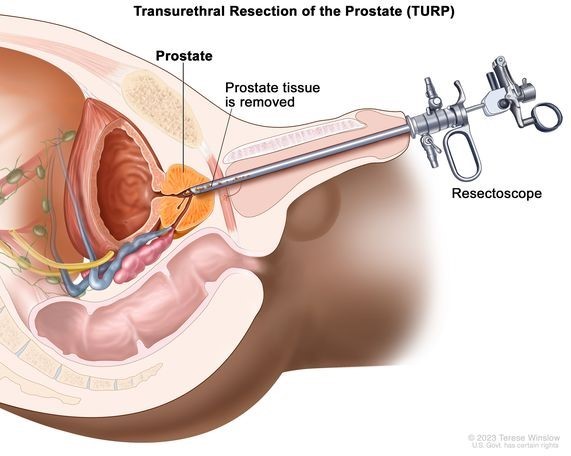
Dark red urine following a transurethral resection of the prostate (TURP) can indicate active bleeding or hematoma formation. It is important to notify the provider because further assessment and intervention may be necessary to address the source of the bleeding and prevent complications.
Frequent urge to urinate is expected after a TURP procedure as the bladder recovers and adapts to the changes. This is not a concerning finding and does not require immediate reporting to the provider.
Urine output of 300 mL over 8 hours can be considered adequate, especially in the early postoperative period. The nurse should continue to monitor the client's urinary output, but this finding does not require immediate reporting.
Occasional small clots in the urine can be expected after a TURP procedure due to the healing process and sloughing of tissue. However, if the clots become large or obstructive, or if there is a sudden increase in the frequency of clots, it should be reported to the provider.
Correct Answer is A
Explanation
ECT can cause temporary memory loss, particularly for events occurring around the time of the treatment. The client may experience difficulty remembering details of recent events or conversations. This effect is usually temporary and improves over time.
Neck pain is not a typical adverse reaction to ECT. The procedure itself does not involve manipulation or strain on the neck, and significant neck pain following ECT would be unusual. However, it is essential for the nurse to assess and address any discomfort or pain the client experiences after the procedure.
Voice alteration is not a known adverse reaction to ECT. ECT primarily affects the brain and does not directly impact the vocal cords or voice production.
Tingling of the scalp is not a common adverse reaction to ECT. During the procedure, the client receives a brief electrical stimulus, usually applied through electrodes placed on the scalp. Sensations experienced during the procedure are typically related to the electrical stimulation and are transient.

Whether you are a student looking to ace your exams or a practicing nurse seeking to enhance your expertise , our nursing education contents will empower you with the confidence and competence to make a difference in the lives of patients and become a respected leader in the healthcare field.
Visit Naxlex, invest in your future and unlock endless possibilities with our unparalleled nursing education contents today