
A nurse is assessing a toddler who has suspected lead poisoning.
Which of the following findings should the nurse expect the client to manifest with acute lead poisoning?
Increased urinary output.
Anorexia.
Diarrhea.
Jaundice.
Jaundice.
The Correct Answer is B
Acute lead poisoning in toddlers can cause anorexia, as well as vomiting, abdominal pain, and constipation.
These symptoms can progress to seizures, coma, and even death if not treated promptly.
Choice A, increased urinary output, is not the correct answer because lead poisoning can cause a decrease in urinary output due to the effect of lead on the kidneys.
Choice C, diarrhea, is not the correct answer because lead poisoning is more likely to cause constipation than diarrhea.
Choice D, jaundice, is not the correct answer because jaundice is not a common finding in lead poisoning.
Jaundice is a yellowing of the skin and whites of the eyes caused by an excess of bilirubin in the blood, which is not directly related to lead poisoning.
Nursing Test Bank
Naxlex Comprehensive Predictor Exams
Related Questions
Correct Answer is A
Explanation
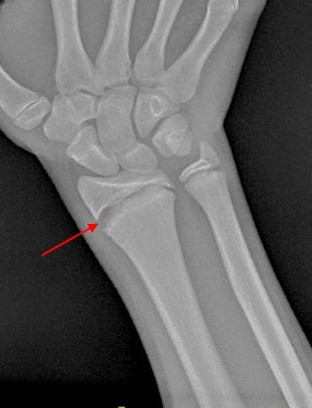
An epiphyseal fracture is a fracture that occurs in the epiphyseal plate, which is the layer of cartilage between the end of a long bone and the start of the bone shaft.
This type of fracture is most common in children and adolescents, as their bones are still growing and the epiphyseal plate is not yet fused to the bone shaft.
Because this is where new bone develops, injuries to this area can cause the plate to close prematurely, jeopardizing bone growth.
Choice B, “Bone marrow can be lost through the fracture,” is incorrect because
bone marrow is not lost through an epiphyseal fracture.
Choice C, “The younger the child the longer the healing process will take,” is incorrect because younger children generally heal faster than older children or adults.
Choice D, “The blood supply to the bone is disrupted,” is incorrect because an
epiphyseal fracture does not necessarily disrupt the blood supply to the bone.
Correct Answer is B
Explanation
Normal urine output for a child is 1-2 ml/kg/hr.
The child weighs 33 lb (15 kg), so their expected urine output over an 8-hour period would be between 120 mL and 240 mL.
The child’s urine output of 160 mL falls within this range.
Choice A, Notifying the provider, is not necessary because the child’s urine output
is within the normal range.
Choice C, Perform a bladder scan at the bedside, is not necessary because there is no indication of urinary retention.
Choice D, Providing oral rehydration fluids, is not necessary because the child’s urine output is within the normal range.
Whether you are a student looking to ace your exams or a practicing nurse seeking to enhance your expertise , our nursing education contents will empower you with the confidence and competence to make a difference in the lives of patients and become a respected leader in the healthcare field.
Visit Naxlex, invest in your future and unlock endless possibilities with our unparalleled nursing education contents today