
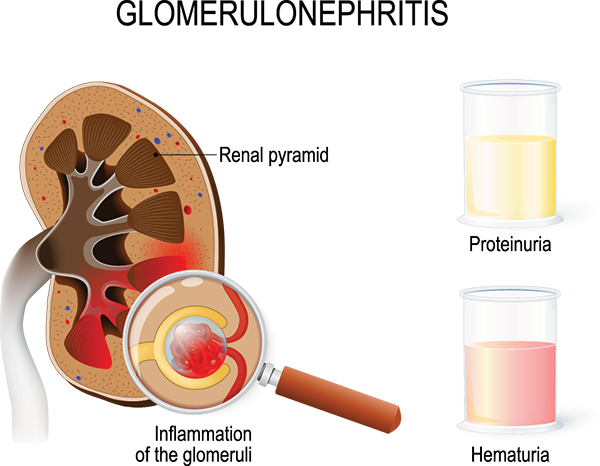
A nurse is caring for a child who has acute glomerulonephritis.
Which of the following actions is the nurse's priority?
Check the child's daily weight.
Educate the parents about potential complications.
Place the child on a no-salt-added diet.
Maintain a saline lock.
The Correct Answer is A
Nursing care planning goals for a child with acute glomerulonephritis are directed toward the excretion of excess fluid through urination.
Monitoring fluid status is very important and daily weights are an effective way to monitor fluid retention, as weight gain is the earliest sign of fluid retention.
Choice B, Educating the parents about potential complications, is important but not the nurse’s priority.
Choice C, Place the child on a no-salt-added diet, which may be part of the treatment
plan but is not the nurse’s priority.
Choice D, Maintaining a saline lock, may be necessary for administering medications but is not the nurse’s priority.
Nursing Test Bank
Naxlex Comprehensive Predictor Exams
Related Questions
Correct Answer is B
Explanation
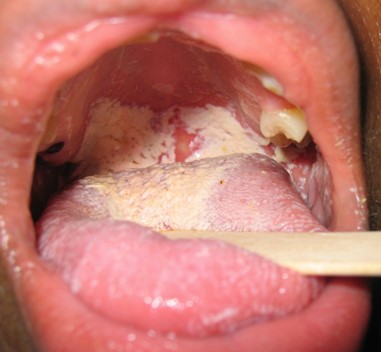
The nurse should suspect candidiasis, also known as oral thrush.
Candidiasis is a fungal infection that can occur in the mouth and is characterized by the presence of a white, milky plaque that does not come off with rubbing.
The child’s use of antibiotics, immunosuppressants, and corticosteroids can increase the risk of developing candidiasis.
Choice A is incorrect because dermatitis is an inflammation of the skin and
would not present as a white plaque in the mouth.
Choice C is incorrect because herpes simplex typically presents as painful blisters or sores in the mouth.
Choice D is incorrect because squamous cell carcinoma typically presents as a firm, painless growth, or ulcer in the mouth.
Correct Answer is A
Explanation
“Our baby will sleep in our bed because I am breastfeeding.” Sharing a bed with a baby increases the risk of SIDS1.
Choice B is not the answer because removing blankets and toys from the crib is a recommended way to reduce the risk of SIDS2.
Choice C is not the answer because giving a baby a pacifier during naps and at bedtime can help reduce the risk of SIDS.
Choice D is not the answer because placing a baby on their back when sleeping is one of the most important measures to help protect against SIDS1.
Whether you are a student looking to ace your exams or a practicing nurse seeking to enhance your expertise , our nursing education contents will empower you with the confidence and competence to make a difference in the lives of patients and become a respected leader in the healthcare field.
Visit Naxlex, invest in your future and unlock endless possibilities with our unparalleled nursing education contents today