
A nurse is caring for a client who has dementia.
Which of the following findings should the nurse expect?
Memory loss that disrupts ADLs
Catatonia
Illusions
Pressured speech
The Correct Answer is A
a. Memory loss that disrupts ADLs
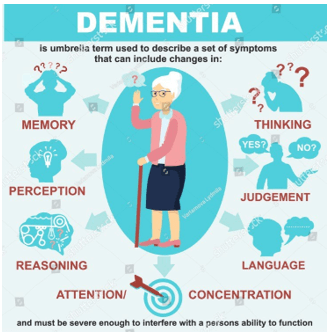
Explanation: Dementia is a condition characterized by a decline in cognitive function that affects a person's ability to perform activities of daily living (ADLs). Memory loss is a common symptom of dementia, particularly in the early stages. The memory loss can disrupt a person's ability to carry out tasks they were previously able to do independently, such as dressing, bathing, and eating. Therefore, option a is the correct answer.
Option b, catatonia, is a condition characterized by a lack of movement or activity, which is not typically associated with dementia.
Option c, illusions, involve a misinterpretation of sensory information and may occur in some forms of dementia but are not a defining feature.
Option d, pressured speech, is a symptom commonly associated with mania or bipolar disorder, but is not typically seen in dementia.
Nursing Test Bank
Naxlex Comprehensive Predictor Exams
Related Questions
Correct Answer is B
Explanation
Choice A Reason:
Burying the body within 24 hours is not a common Hindu practice.
Choice B Reason:
To cremate the client's body is correct .Hinduism traditionally practices cremation as the preferred method of disposing of the deceased's body. The other options are not typically associated with Hindu funeral customs:
Choice C Reason:
Staying with the body for 8 hours following death is not a strict Hindu requirement, although family members may choose to stay with the body for a period of time.
Choice D Reason:
Prohibiting medical personnel from touching the body is not a common Hindu custom, although some families may prefer to handle the body themselves.
Correct Answer is D
Explanation
Choice A Reason:
Documenting the infiltration is important for the client's medical record, but it should not be the first action when infiltration is suspected.
Choice B Reason:
Elevating the arm can help reduce swelling, but it should come after stopping the infusion.
Choice C Reason:
Applying a warm compress can help with comfort and may be done after stopping the infusion, but it is not the first action.
Choice D Reason:
Stop the infusion is correct. When a nurse observes signs of infiltration around an IV insertion site, such as edema and coolness of the skin, the first and most important action is to stop the infusion immediately. Infiltration occurs when the IV fluid leaks into the surrounding tissue instead of going into the vein. Stopping the infusion prevents further damage to the surrounding tissue and minimizes the risk of complications.
Whether you are a student looking to ace your exams or a practicing nurse seeking to enhance your expertise , our nursing education contents will empower you with the confidence and competence to make a difference in the lives of patients and become a respected leader in the healthcare field.
Visit Naxlex, invest in your future and unlock endless possibilities with our unparalleled nursing education contents today