
A nurse is caring for a client who has vision loss. Which of the following actions should the nurse take? (Select all that apply.)
Keep objects in the client's room in the same place.
Approach the client from the side.
Ensure there is high-wattage lighting in the client's room.
Allow extra time for the client to perform tasks.
Touch the client gently to announce presence.
Correct Answer : A,C,D
A. Keeping objects in the same place help maintain a safe environment and independence for a client with vision loss.
B. When caring for a client with vision loss, the nurse should avoid approaching the client from the side since it may startle them.
C. Providing high-wattage lighting can improve visibility for clients with partial vision loss. Adequate lighting reduces shadows and enhances contrast, making it easier for the client to see their surroundings
D. Allowing extra time for tasks helps orient them to the nurse's presence and facilitates communication.
E. While gentle touch can be a way to announce presence, it is better to verbally announce oneself first to avoid startling the client, particularly if they are not expecting contact.
Nursing Test Bank
Naxlex Comprehensive Predictor Exams
Related Questions
Correct Answer is A
Explanation
A: Methylphenidate should be taken preferably 30 to 45 minutes before meals to reduce the risk of stomach upset. Furthermore, food interferes with its absorption.
B: Administering methylphenidate at bedtime is incorrect because it is a stimulant and can interfere with sleep.
C: Avoiding foods containing tyramine is not relevant for methylphenidate; it is more commonly a concern with certain antidepressants such as MAO inhibitors.
D: There is no need to avoid excess sodium intake specifically related to methylphenidate usage; this advice does not pertain to the side effects or interactions of the medication.
Correct Answer is D
Explanation
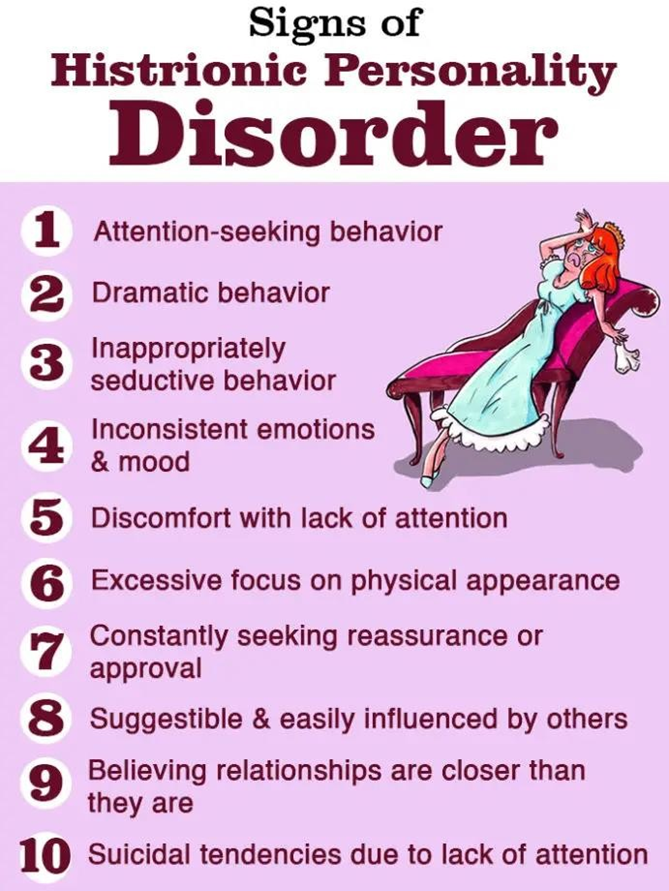
A. Splitting behavior, where the client views people and situations as either all good or all bad, is more characteristic of borderline personality disorder rather than histrionic personality disorder.
B. Emotional lability, characterized by rapid shifts in mood, is not a primary feature of histrionic personality disorder.
C. Unexpressive affect, or a lack of emotional expression, is not a typical feature of histrionic personality disorder, which often presents with exaggerated and dramatic emotional displays.
D. Self-centered behavior, including attention-seeking and dramatic behavior to gain approval or admiration from others, is a hallmark feature of histrionic personality disorder.
Whether you are a student looking to ace your exams or a practicing nurse seeking to enhance your expertise , our nursing education contents will empower you with the confidence and competence to make a difference in the lives of patients and become a respected leader in the healthcare field.
Visit Naxlex, invest in your future and unlock endless possibilities with our unparalleled nursing education contents today