
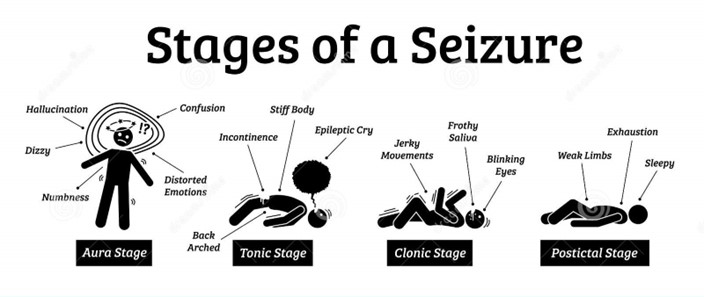
A nurse is caring for a client who is difficult to arouse and very sleepy for several hours following a generalized tonic-clonic seizure. Which of the following descriptions should the nurse use when documenting this finding in the medical record?
Presence of absence seizures
Postictal phase
Presence of automatisms
Aura phase
The Correct Answer is B
The nurse should use the term "postictal phase" when documenting the client's difficulty arousing and sleepiness for several hours following a generalized tonic-clonic seizure. The postictal phase is the period of time immediately following a seizure during which the client may be difficult to arouse and very sleepy.
Presence of absence seizures, presence of automatisms, and aura phase are not appropriate descriptions for the nurse to use when documenting this finding in the medical record. Absence seizures are a type of seizure characterized by brief episodes of staring and unresponsiveness. Automatisms are repetitive, unconscious movements that can occur during a seizure. The aura phase is a warning sign that can occur before a seizure.
Nursing Test Bank
Naxlex Comprehensive Predictor Exams
Related Questions
Correct Answer is ["B","C","E"]
Explanation
A nurse collecting data from a client who has an exacerbation of gout should expect to find edema, tophi, and erythema. Gout is a type of arthritis that occurs when urate crystals accumulate in the joints, causing inflammation and intense pain². Edema (swelling) is a common symptom of gout⁴. Tophi are deposits of urate crystals that can form under the skin in people with chronic gout³. Erythema (redness) is another common symptom of gout⁴.
Correct Answer is B
Explanation
The nurse should identify infection as a complication to the client's condition. A warm area on the cast could indicate the presence of an underlying infection. The warmth could be due to an increase in blood flow to the area as the body tries to fight off the infection.
Uneven cast drying, pressure from the cast, and poor circulation are not complications that would cause a warm area on the cast. Uneven cast drying could cause discomfort but would not result in warmth. Pressure from the cast could cause skin breakdown but would not result in warmth. Poor circulation could cause coolness or pallor but would not result in warmth.
Whether you are a student looking to ace your exams or a practicing nurse seeking to enhance your expertise , our nursing education contents will empower you with the confidence and competence to make a difference in the lives of patients and become a respected leader in the healthcare field.
Visit Naxlex, invest in your future and unlock endless possibilities with our unparalleled nursing education contents today