
A nurse is caring for a client who recently gave birth to her first child. The newborn is crying and the client states, "I can't seem to do anything right. What should I do?" Which of the following responses should the nurse make?
"I'll take him back to the nursery, so you can get some rest."
"Let me show you how to swaddle and cuddle him, then you try."
"Babies need to cry soon after they are born to develop their lungs.
"If I turn him on his side, maybe he'll go back to sleep."
The Correct Answer is B
This response acknowledges the client's concern and offers support and guidance. By demonstrating and encouraging the client to participate in swaddling and cuddling the newborn, the nurse promotes bonding, provides a practical solution for soothing the baby, and empowers the client to actively engage in caring for her child.
Nursing Test Bank
Naxlex Comprehensive Predictor Exams
Related Questions
Correct Answer is B
Explanation
This response acknowledges the client's concern and offers support and guidance. By demonstrating and encouraging the client to participate in swaddling and cuddling the newborn, the nurse promotes bonding, provides a practical solution for soothing the baby, and empowers the client to actively engage in caring for her child.
Correct Answer is A
Explanation
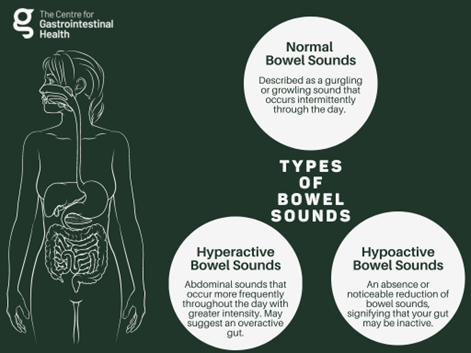
Hyperactive bowel sounds are bowel sounds that are louder and more frequent than normal. They may be heard as high-pitched rushing or tinkling sounds that occur irregularly at a rate greater than 5-6 sounds per minute. They are often associated with increased intestinal motility, such as diarrhea, gastroenteritis, or early bowel obstruction.
Option b is incorrect because hyperactive bowel sounds are not typically associated with a paralytic ileus, which is a condition where the bowel stops working and there is a lack of bowel sounds.
Option c is incorrect because hyperactive bowel sounds indicate increased motility, not decreased motility.
Option d is incorrect because soft bowel sounds at a rate of 1/min are considered hypoactive bowel sounds, which can be a sign of decreased intestinal motility, as seen in constipation or postoperative ileus.
Whether you are a student looking to ace your exams or a practicing nurse seeking to enhance your expertise , our nursing education contents will empower you with the confidence and competence to make a difference in the lives of patients and become a respected leader in the healthcare field.
Visit Naxlex, invest in your future and unlock endless possibilities with our unparalleled nursing education contents today