
A nurse is caring for a client with a new skin inflammation on the chest. Which of the following is an important assessment question to ask the client?
How many people live in your home?
Did you have a recent exposure to Irritants?
Is nausea associated with your rash7
What is your body mass index?
The Correct Answer is B
-
A. How many people live in your home?
This question pertains to social and environmental factors but is not directly related to assessing skin inflammation on the chest. While social factors can impact overall health, such as stress levels or exposure to infectious agents, the number of people living in the client's home is unlikely to be directly related to a new skin inflammation unless there are specific circumstances, such as sharing personal care products or close contact with others who have similar skin issues.
B. Did you have a recent exposure to irritants?
This question is highly relevant to assessing a new skin inflammation on the chest. Exposure to irritants or allergens can trigger or worsen skin conditions, such as contact dermatitis or allergic reactions. By asking about recent exposure to potential irritants like new detergents, soaps, fabrics, chemicals, or environmental factors, the nurse can gather important information to identify possible triggers for the skin inflammation.
C. Is nausea associated with your rash?
Nausea is typically not directly associated with a skin rash or inflammation unless there is a systemic condition or allergic reaction causing both symptoms. While it's important to assess for any systemic signs or symptoms that may be related to the skin condition, such as fever or malaise, specifically asking about nausea may not provide relevant information about the skin inflammation on the chest.
D. What is your body mass index?
Body mass index (BMI) is a measure of body weight relative to height and is not directly related to assessing a new skin inflammation on the chest. While obesity or changes in body weight can sometimes contribute to skin issues, such as friction-related dermatitis or hormonal changes affecting skin health, BMI alone is not a primary assessment parameter for localized skin conditions unless there are specific concerns related to weight-related skin problems.
Nursing Test Bank
Naxlex Comprehensive Predictor Exams
Related Questions
Correct Answer is B
Explanation
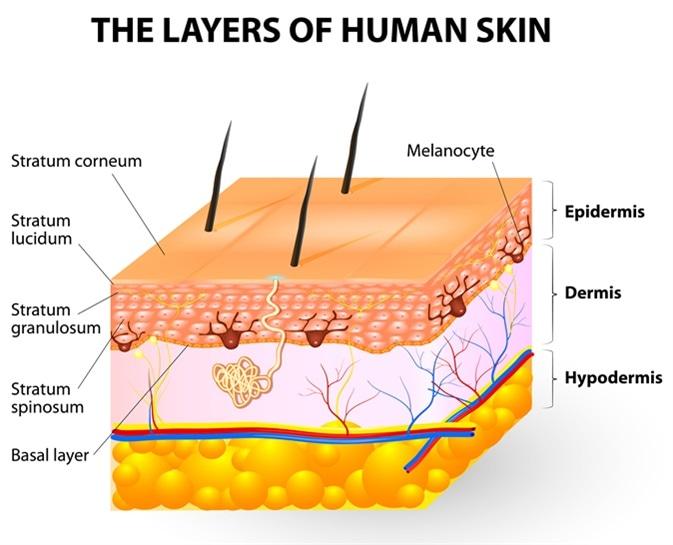
A. Loose connective tissue:
Melanocytes are not typically found in loose connective tissue. Their primary location is within the epidermis, specifically in the basal layer, where they interact with keratinocytes to produce melanin and contribute to skin color. Loose connective tissue contains collagen and elastin fibers, as well as fibroblasts, but it does not house melanocytes.
B. Epidermis:
This is the correct answer. Melanocytes are primarily located in the basal layer of the epidermis, which is the deepest layer of the epidermis. These cells produce melanin, a pigment that helps protect the skin from UV radiation and determines skin color. Melanocytes are interspersed among keratinocytes in the epidermis and transfer melanin to keratinocytes to provide skin pigmentation.
C. Dermis:
The dermis is the layer of skin beneath the epidermis and consists of connective tissue, blood vessels, nerves, hair follicles, and sweat glands. While the dermis plays a crucial role in supporting and nourishing the epidermis, melanocytes are not primarily located in the dermis. They are confined to the basal layer of the epidermis.
D. Superficial fascia:
The superficial fascia, also known as the subcutaneous tissue or hypodermis, lies beneath the dermis and consists of adipose (fat) tissue and connective tissue. It provides insulation, energy storage, and cushioning for underlying structures. However, melanocytes are not typically found in the superficial fascia. They are restricted to the epidermis, specifically the basal layer, where they carry out their function of melanin production.
Correct Answer is A
Explanation
A. Urine output is greater than 0.5 mL/kg/hr
During the fluid resuscitation phase of burn management, one of the primary goals is to maintain adequate tissue perfusion and organ function by ensuring sufficient fluid intake. The best method for assessing the results of fluid resuscitation is by monitoring urine output. A urine output of greater than 0.5 mL/kg/hr is indicative of adequate renal perfusion and kidney function, suggesting that fluid resuscitation is effective in maintaining tissue perfusion and preventing complications such as acute kidney injury.
B. Serum hemoglobin is 11 gm/dL
Serum hemoglobin levels can be affected by various factors, including fluid resuscitation, blood loss, and other medical conditions. While monitoring hemoglobin levels is important in overall patient assessment, it is not the best method specifically for assessing the results of fluid resuscitation during the initial phase of burn management.
C. Breath sounds are clear bilaterally
Clear bilateral breath sounds indicate adequate lung function and ventilation but may not directly reflect the effectiveness of fluid resuscitation in maintaining tissue perfusion. Lung sounds can be influenced by factors such as lung injury from smoke inhalation or mechanical ventilation settings, which may not correlate directly with fluid resuscitation outcomes.
D. Heart rate is 122/min
Heart rate can be influenced by various factors such as pain, stress, medications, and underlying medical conditions. While monitoring heart rate is important in assessing patient status, it is not the most reliable method for specifically evaluating the results of fluid resuscitation during the fluid resuscitation phase of burn management.
Whether you are a student looking to ace your exams or a practicing nurse seeking to enhance your expertise , our nursing education contents will empower you with the confidence and competence to make a difference in the lives of patients and become a respected leader in the healthcare field.
Visit Naxlex, invest in your future and unlock endless possibilities with our unparalleled nursing education contents today