
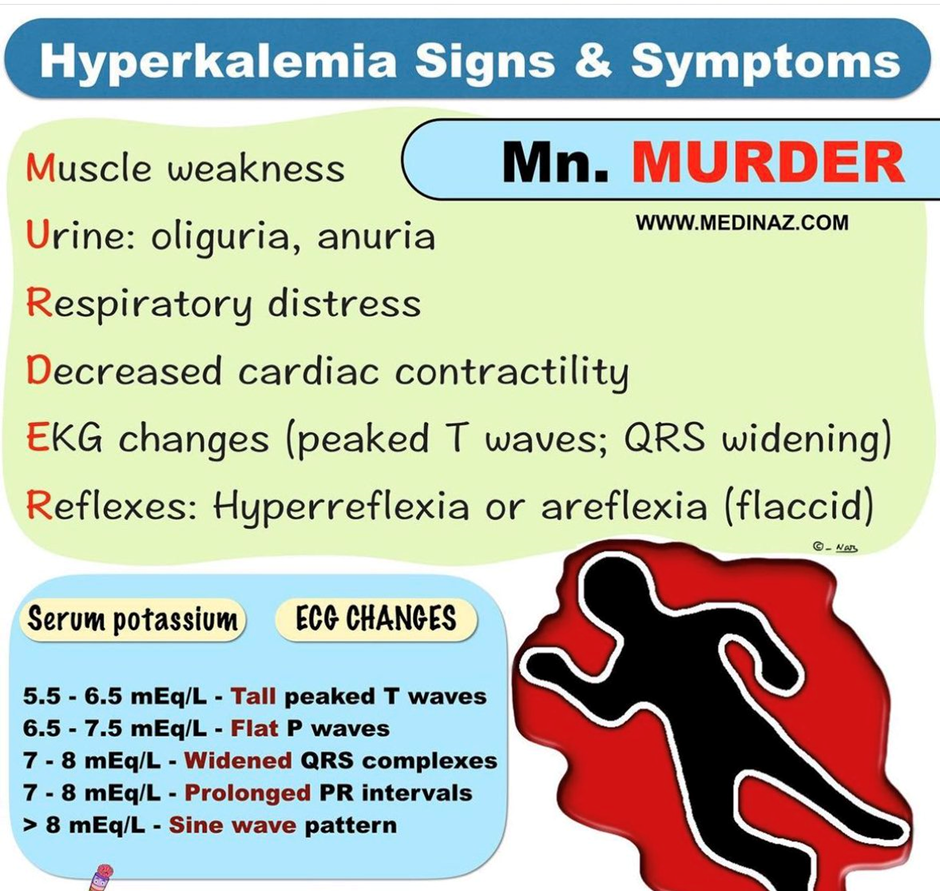
A nurse is collecting data from a client who is receiving IV fluid replacement to treat diarrhea but now has oliguria. Laboratory results include a potassium level of 5.6 mEq/L. The nurse should report which of the following findings to the provider immediately?
Muscle weakness
Paresthesias
Abdominal cramps
Palpitations
The Correct Answer is D
Choice A Reason:
Muscle weakness is incorrect. Muscle weakness can be a symptom of hyperkalemia (elevated potassium levels). However, it is not the most urgent symptom, and the provider should be informed to address the underlying cause.
Choice B Reason:
Paresthesias is incorrect. Paresthesias (tingling or numbness) can also occur with hyperkalemia. While important to assess, it may not be the most urgent symptom requiring immediate attention.
Choice C Reason:
Abdominal cramps is incorrect. Abdominal cramps can be associated with hyperkalemia, but they are not the most critical symptom. It's essential to address the underlying cause, but it may not require immediate intervention compared to other symptoms.
Choice D Reason:
Palpitations is correct. Palpitations are a concerning symptom, especially in the context of hyperkalemia. Elevated potassium levels can lead to cardiac arrhythmias, and palpitations may be indicative of serious cardiac complications. This is a critical finding that requires immediate attention from the healthcare provider.
Nursing Test Bank
Naxlex Comprehensive Predictor Exams
Related Questions
Correct Answer is A
Explanation
Choice A Reason:
"Call me so that I can help you change your position." This response offers practical assistance and comfort to the client. Repositioning can sometimes alleviate discomfort associated with breathing difficulties, and the nurse can offer guidance or physical help to adjust the client's position for improved comfort.
Choice B Reason:
"Try to close your eyes and get some sleep." This response doesn't directly address the client's immediate concern about difficulty breathing and may not offer practical help.
Choice C Reason:
"It is common for breathing to become more difficult as time goes on." While this statement acknowledges the situation, it might not provide the client with actionable guidance or support on how to manage the difficulty in breathing.
Choice D Reason:
"Therapy choices are limited for clients who do not want resuscitation." This response might be interpreted as dismissive or unrelated to the client's immediate needs, focusing more on the DNR order rather than addressing the current concern about breathing difficulties.
Correct Answer is B
Explanation
Choice A Reason:
"He may need a feeding tube" is inappropriate response. Suggesting a feeding tube without further assessment or information might be premature and could cause unnecessary concern or anxiety for the son. It's essential to explore the situation more before proposing such an intervention.
Choice B Reason:
"Tell me more about what happens at mealtime” is appropriate response. This response encourages the son to provide further details about the situation, allowing the nurse to gather more information about the specific issues or challenges related to the client's eating habits. Understanding the circumstances around mealtime can help the nurse identify potential reasons for the lack of appetite or eating difficulties and offer more targeted guidance or solutions.
Choice C Reason:
"Why do you think he's not eating?" This response is inappropriate. While asking about the son's thoughts is valuable, this question might not directly address the situation at hand or provide immediate assistance or guidance to address the client's eating difficulties.
Choice D Reason:
"I'm sure it's nothing serious and his appetite will return soon” is inappropriate response. Offering reassurance without understanding the underlying cause may downplay a potentially concerning issue. It's crucial to investigate the reasons behind the lack of appetite before assuming it will resolve without further action.
Whether you are a student looking to ace your exams or a practicing nurse seeking to enhance your expertise , our nursing education contents will empower you with the confidence and competence to make a difference in the lives of patients and become a respected leader in the healthcare field.
Visit Naxlex, invest in your future and unlock endless possibilities with our unparalleled nursing education contents today