
A nurse is educating a group of nursing students about client-focused community-based nursing. The nurse should recognize which of the following best describes client-focused community-based nursing.
Giving care with a focus on the aggregate's needs.
A philosophy that guides family-centered illness care.
Providing care with a focus on the group's needs.
A value system in which all clients receive optimal care.
The Correct Answer is B
Choice A reason: Giving care with a focus on the aggregate's needs is not the best description of client-focused community-based nursing, as it implies that the nurse is providing care to a population or a group of individuals who share some common characteristics or risk factors. This is more aligned with the concept of population-focused community-based nursing, which aims to improve the health outcomes of a defined group of people.
Choice B reason: A philosophy that guides family-centered illness care is the best description of client-focused community-based nursing, as it reflects the core values and principles of this approach. Client-focused community-based nursing is a model of care that emphasizes the individual and family as the unit of care, rather than the disease or the health problem. It involves collaborating with the client and family to identify their needs, preferences, strengths, and resources, and providing holistic, culturally sensitive, and evidence-based care that promotes health, wellness, and quality of life.
Choice C reason: Providing care with a focus on the group's needs is not the best description of client-focused community-based nursing, as it suggests that the nurse is providing care to a collective or a social unit that shares some common goals or interests. This is more aligned with the concept of community-oriented community-based nursing, which aims to improve the health status of a specific community or subpopulation.
Choice D reason: A value system in which all clients receive optimal care is not the best description of client-focused community-based nursing, as it does not capture the essence or uniqueness of this approach. While it is true that client-focused community-based nursing strives to provide high-quality care to all clients, it also recognizes that each client and family has different needs, preferences, and expectations that require individualized and tailored interventions.
Nursing Test Bank
Naxlex Comprehensive Predictor Exams
Related Questions
Correct Answer is D
Explanation
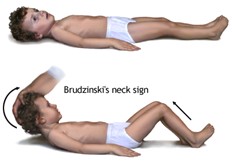
Choice A reason: Decreasing bright lights is an appropriate action for a nurse to take when caring for a client who has signs of meningitis, as it helps to reduce the photophobia (sensitivity to light) and headache that are common symptoms of the condition. However, this action is not the first priority, as it does not prevent the transmission of the infection or treat the underlying cause.
Choice B reason: Initiating IV access is an appropriate action for a nurse to take when caring for a client who has signs of meningitis, as it facilitates the administration of fluids, medications, and blood products that may be needed to manage the condition. However, this action is not the first priority, as it does not prevent the transmission of the infection or treat the underlying cause.
Choice C reason: Administering antibiotics is an appropriate action for a nurse to take when caring for a client who has signs of meningitis, as it helps to treat the bacterial infection that is the most common cause of the condition. However, this action is not the first priority, as it requires a prescription from the health care provider and confirmation of the diagnosis by laboratory tests such as blood culture or cerebrospinal fluid analysis.
Choice D reason: Implementing droplet precautions is the first priority action for a nurse to take when caring for a client who has signs of meningitis, as it helps to prevent the spread of the infection to other clients and staff members. Droplet precautions are a type of isolation precautions that are used for infections that are transmitted by respiratory droplets, such as meningitis, influenza, and pertussis. Droplet precautions involve wearing a surgical mask when entering the client's room, placing the client in a private room or cohorting with other clients who have the same infection, and limiting visitors and staff contact with the client.

Correct Answer is ["B","D","E"]
Explanation
Choice A reason: Initiating a plan of care for a client who is postoperative from an appendectomy is not a task that the RN should delegate to the LPN, as it requires nursing judgment, critical thinking, and assessment skills that are beyond the scope of practice of the LPN. The RN is responsible for developing, implementing, and evaluating the plan of care for each client based on their individual needs, preferences, and goals. The RN can delegate some aspects of the plan of care to the LPN, such as performing routine tasks or monitoring the client's status, but the RN must supervise and evaluate the LPN's performance.
Choice B reason: Administering a tap-water enema to a client who is preoperative is a task that the RN can delegate to the LPN, as it is a standardized procedure that does not require nursing judgment or assessment. The LPN has the knowledge and skills to perform this task safely and effectively, following the established policies and protocols of the facility. The RN should provide clear instructions and expectations to the LPN, such as the type, amount, and temperature of the solution, the position and comfort of the client, and the signs and symptoms to report. The RN should also verify that the LPN has completed the task and documented the outcome.
Choice C reason: Providing discharge instructions to a confused client's spouse is not a task that the RN should delegate to the LPN, as it involves teaching, counseling, and evaluating the client's and family's understanding and readiness for discharge. These are complex activities that require nursing judgment, communication skills, and evaluation skills that are beyond the scope of practice of the LPN. The RN is responsible for ensuring that the client and family receive adequate information and education about the client's condition, treatment, medications, follow-up care, and community resources. The RN can delegate some aspects of discharge planning to the LPN, such as collecting data or providing reinforcement of teaching, but the RN must supervise and evaluate the LPN's performance.
Choice D reason: Catheterizing a client who has not voided in 8 hours is a task that the RN can delegate to the LPN, as it is a standardized procedure that does not require nursing judgment or assessment. The LPN has the knowledge and skills to perform this task safely and effectively, following the established policies and protocols of the facility. The RN should provide clear instructions and expectations to the LPN, such as the type and size of the catheter, the sterile technique, and the urine output measurement. The RN should also verify that the LPN has completed the task and documented the outcome.
Choice E reason: Obtaining vital signs from a client who is 6 hours postoperative is a task that the RN can delegate to the LPN, as it is a routine task that does not require nursing judgment or assessment. The LPN has the knowledge and skills to perform this task safely and effectively, using appropriate equipment and techniques. The RN should provide clear instructions and expectations to the LPN, such as the frequency and parameters of vital signs monitoring. The RN should also verify that the LPN has completed the task and documented the outcome.
Whether you are a student looking to ace your exams or a practicing nurse seeking to enhance your expertise , our nursing education contents will empower you with the confidence and competence to make a difference in the lives of patients and become a respected leader in the healthcare field.
Visit Naxlex, invest in your future and unlock endless possibilities with our unparalleled nursing education contents today