
A nurse is performing a heel stick on a newborn. Which of the following actions should the nurse take?
Puncture the heel on the inner aspect of the foot.
Use an automatic puncture device on the heel.
Cleanse the newborn's heel with an alcohol swab after the procedure.
Place an ice pack on the newborn's heel 5 min before the procedure.
The Correct Answer is B
“Use an automatic puncture device on the heel.” This is the most common and minimally invasive method to draw capillary blood from an infant for medical testing.
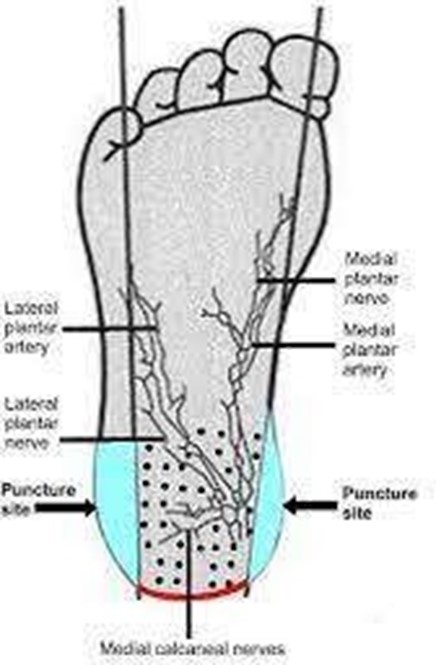
Choice A is incorrect because the heel should be punctured on the outer aspect of the foot to avoid damaging the calcaneus bone.
Choice C is incorrect because the heel should be cleansed with an alcohol swab
before, not after, the procedure.
Choice D is incorrect because there is no need to place an ice pack on the newborn’s heel before the procedure.
Nursing Test Bank
Naxlex Comprehensive Predictor Exams
Related Questions
Correct Answer is B
Explanation
If a prolapsed cord is identified, the nurse should perform a vaginal examination and ensure the presenting part is pushed upwards to relieve pressure on the cord.
Choice A) is not correct because while it is important to cover the cord with a sterile saline saturated towel if it has prolapsed externally 1, it is not the next action after calling for assistance and notifying the provider.
Choice C) is not correct because administering oxygen via non-rebreather mask at 8 L/min is not mentioned as an immediate intervention for a prolapsed cord .
Choice D) is not correct because initiating an infusion of IV fluids for the client is not mentioned as an immediate intervention for a prolapsed cord .
Correct Answer is C
Explanation
A newborn who is 10 hr old and has onset tachypnea.
Tachypnea means rapid breathing and can be a sign of respiratory distress.
Transient tachypnea of the newborn (TTN) is a respiratory disorder usually seen shortly after delivery in babies who are born near or at term.
It is important for the nurse to assess this newborn first to determine the cause of the tachypnea and provide appropriate care.

Choice A, a newborn who is 24 hr old and has not had a meconium stool, may
require further assessment but is not as urgent as a newborn with tachypnea.
Choice B, a newborn who has a short frenulum and is having difficulty breastfeeding, may require assistance with feeding but is not as urgent as a newborn with tachypnea.
Choice D, a newborn who is 30 hr old and has blood-tinged discharge in her diaper, may have pseudomenstruation which is normal and not a cause for concern.
Whether you are a student looking to ace your exams or a practicing nurse seeking to enhance your expertise , our nursing education contents will empower you with the confidence and competence to make a difference in the lives of patients and become a respected leader in the healthcare field.
Visit Naxlex, invest in your future and unlock endless possibilities with our unparalleled nursing education contents today